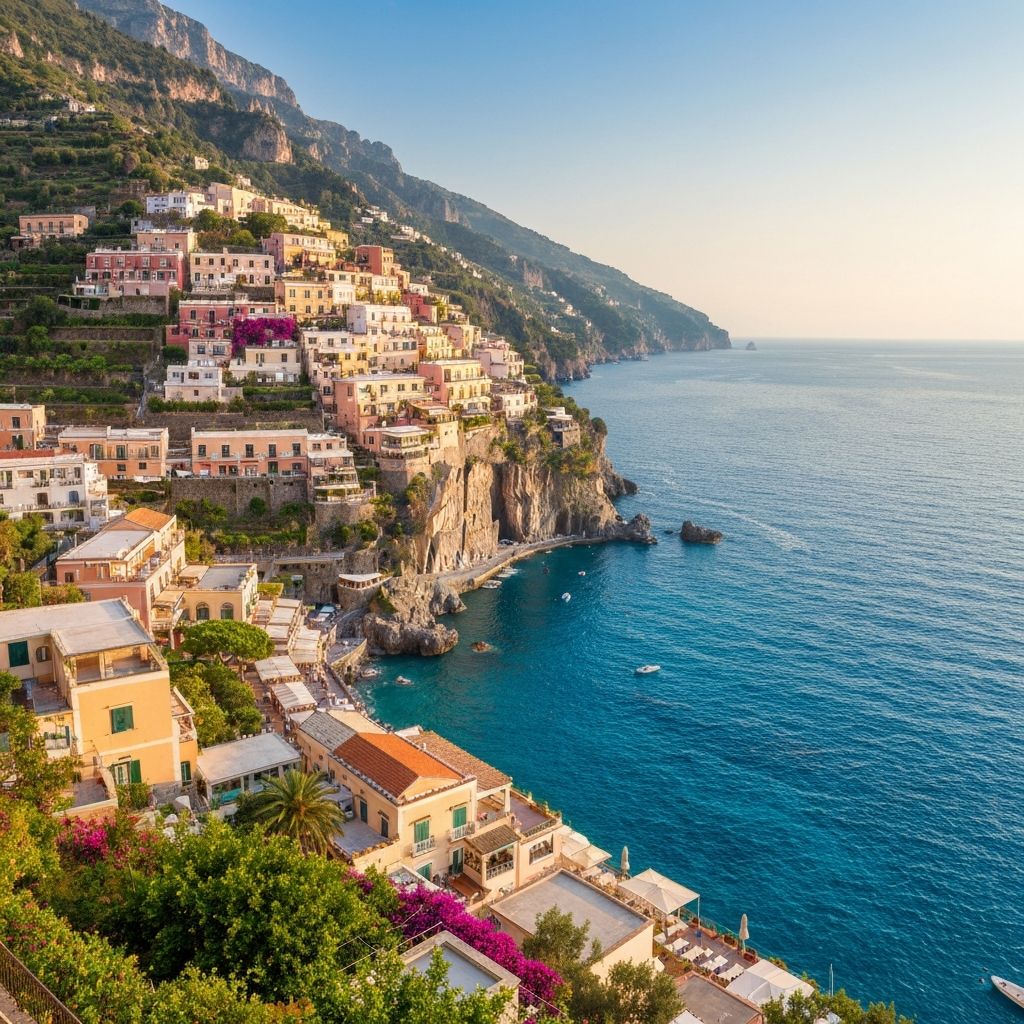
Where the Mediterranean meets medieval majesty, the Amalfi Coast rises as a vertical tapestry of pastel villas, terraced lemon groves, and cobalt horizons. Once the beating heart of a maritime republic that rivaled Venice and Genoa, this UNESCO-protected coastline now stands as Europe's most dramatic stage for intimate celebrations and transformative escapes. Unlike the horizontal expanses of tropical islands, Amalfi offers vertical elegance—a cascading symphony of cliffside chapels, palazzo gardens suspended above the sea, and winding pathways that connect earth to sky. This comprehensive guide decodes the intricacies of planning an Amalfi Coast wedding or retreat, from navigating Italian nuptial bureaucracy to chartering private yachts that reveal hidden coves accessible only by water.
The Renaissance of the Coast
Between the 9th and 11th centuries, the Amalfi Republic commanded Mediterranean trade routes with a fleet that stretched from Constantinople to North Africa. The Tavole Amalfitane—Europe's first maritime legal code—established standards for commerce that influenced naval law for centuries. This golden age left an architectural legacy visible in every cathedral dome and ceramic-tiled cupola: Byzantine mosaics blend with Norman arches, while Moorish gardens cascade down cliffs engineered by merchants who understood both beauty and strategic defense. The coast's vertical urbanism wasn't aesthetic choice but necessity, as settlements clung to precipitous slopes to maximize arable land and create natural fortifications against Saracen pirates.
Today's luxury hospitality continues this legacy of ingenious space utilization. Historic palazzos—once the summer estates of Neapolitan nobility—have been meticulously restored with contemporary amenities concealed behind 18th-century frescoes. The terrace gardens that fed aristocratic households now host intimate wedding ceremonies framed by bougainvillea and Tyrrhenian panoramas. Understanding this layered history enriches the modern experience: when you dine on a Michelin-starred terrace in Ravello, you're occupying the same vantage point where Wagner composed Parsifal, inspired by Villa Rufolo's gardens that seemed to float above the clouds.
Positano vs. Ravello: Finding Your Ethereal Perspective
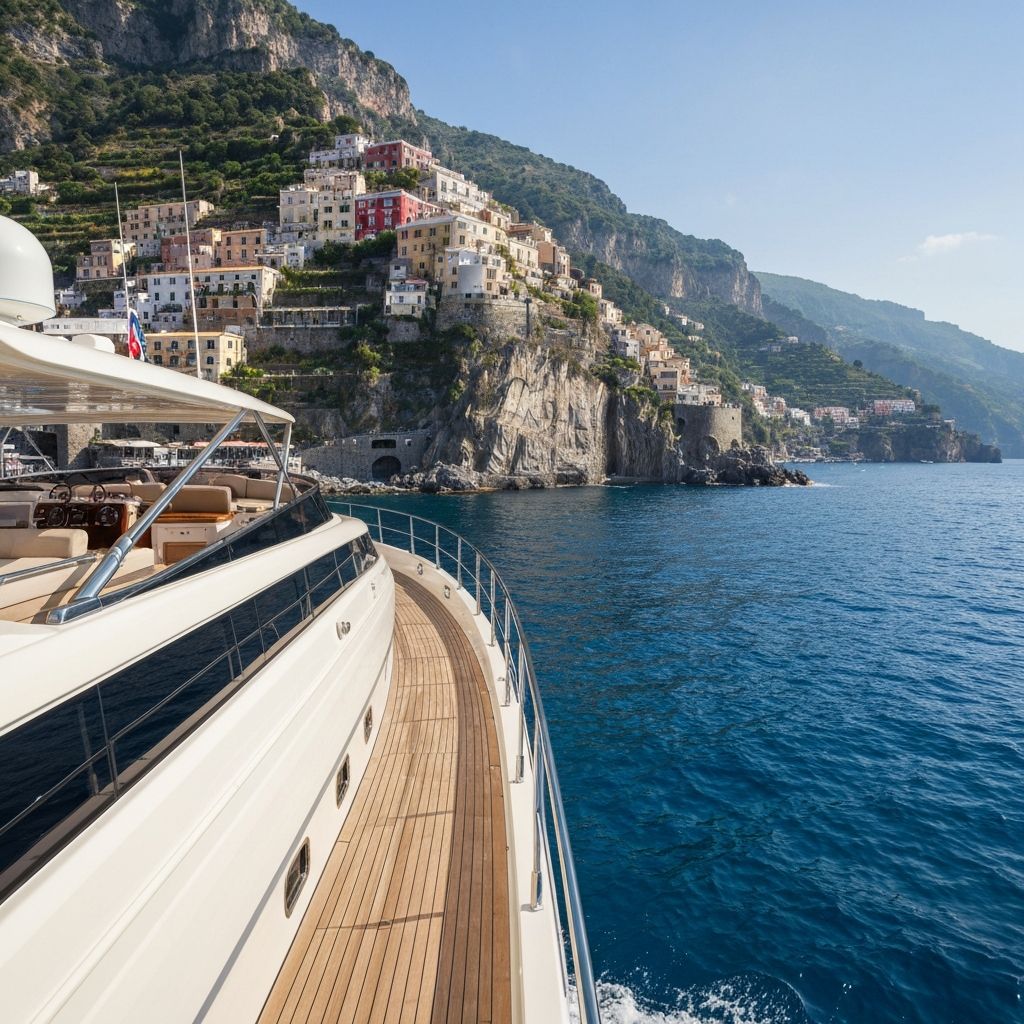
Positano embodies vertical glamour—its pastel houses tumble down the cliffside like a waterfall of coral and ochre, visible from miles offshore. This iconic village offers direct beach access, yacht mooring at Spiaggia Grande, and a cosmopolitan energy inherited from decades as a bohemian haven turned luxury destination. Weddings here typically center around beach clubs like La Sponda at Le Sirenuse, where ceremonies take place on terraces illuminated by 400 candles at sunset. The advantage is accessibility and post-ceremony vibrancy; guests can stroll narrow lanes browsing artisan boutiques or savoring limoncello at cliffside cafés. However, Positano's celebrity status means limited privacy and higher costs—expect to pay €15,000-25,000 for venue rental alone during peak season.
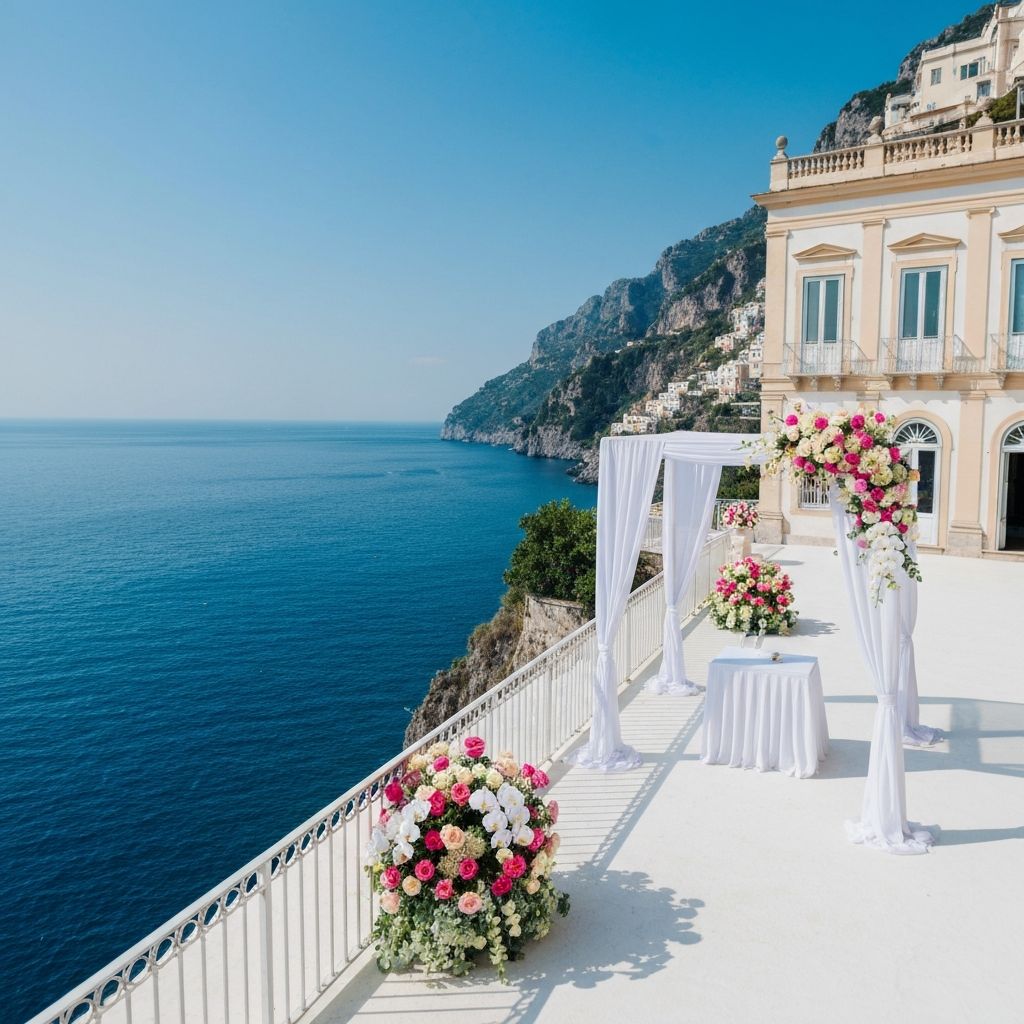
Ravello offers the opposite proposition: elevated serenity 365 meters above sea level. Perched on a mountain ridge between Maiori and Minori, this medieval hilltop town trades beach proximity for ethereal cloud-level gardens and unparalleled acoustic beauty. Villa Cimbrone's Terrace of Infinity—lined with marble busts gazing over the Gulf of Salerno—provides the coast's most cinematic ceremony backdrop. Ravello's wedding packages often include exclusive access to historic villa grounds and concert hall spaces where the annual music festival hosts world-class performances. The intimate scale (population: 2,500) ensures privacy, while the lack of beach access filters out day-trippers. For couples seeking contemplative elegance over seaside vivacity, Ravello's palazzo gardens suspended between earth and sky offer unmatched atmospheric depth.
Logistics of a Cliffside Wedding
Italian civil weddings require navigating bureaucracy that dates to Napoleonic codes. Non-EU citizens must provide a Nulla Osta (certificate of no impediment) from their home country embassy, legalized with an Apostille stamp, then translated by a certified Italian court translator. This documentation must be submitted to the municipality (comune) at least 60 days before the ceremony, though experienced wedding planners recommend initiating the process six months in advance. Religious ceremonies in Catholic churches require additional Canon Law compliance, including pre-marital counseling and baptism certificates. Symbolic ceremonies—increasingly popular among international couples—bypass legal requirements but hold no juridical validity; many couples opt for legal marriage at home followed by a symbolic Amalfi blessing.
Terrace planning demands acute awareness of vertical logistics. Guest transportation typically requires shuttling via narrow switchback roads where full-size coaches cannot navigate—budget for multiple 8-passenger van trips. Sound amplification faces strict curfews (usually 11 PM) and decibel limits to preserve residential tranquility; this favors acoustic ensembles over DJ setups. Floral installations must account for wind exposure on cliff-edge terraces, necessitating weighted structures and salt-resistant blooms like bougainvillea, oleander, and jasmine. The most overlooked detail: restroom access in historic venues, which often means portable luxury facilities discreetly positioned in garden corners. Top planners like The Amalfi Experience or Exclusive Italy Weddings charge €8,000-15,000 but provide invaluable comune liaison services and vendor networks tested by years of executing cliffside logistics.
Hidden Palazzos: Ultra-Private Villa Stays
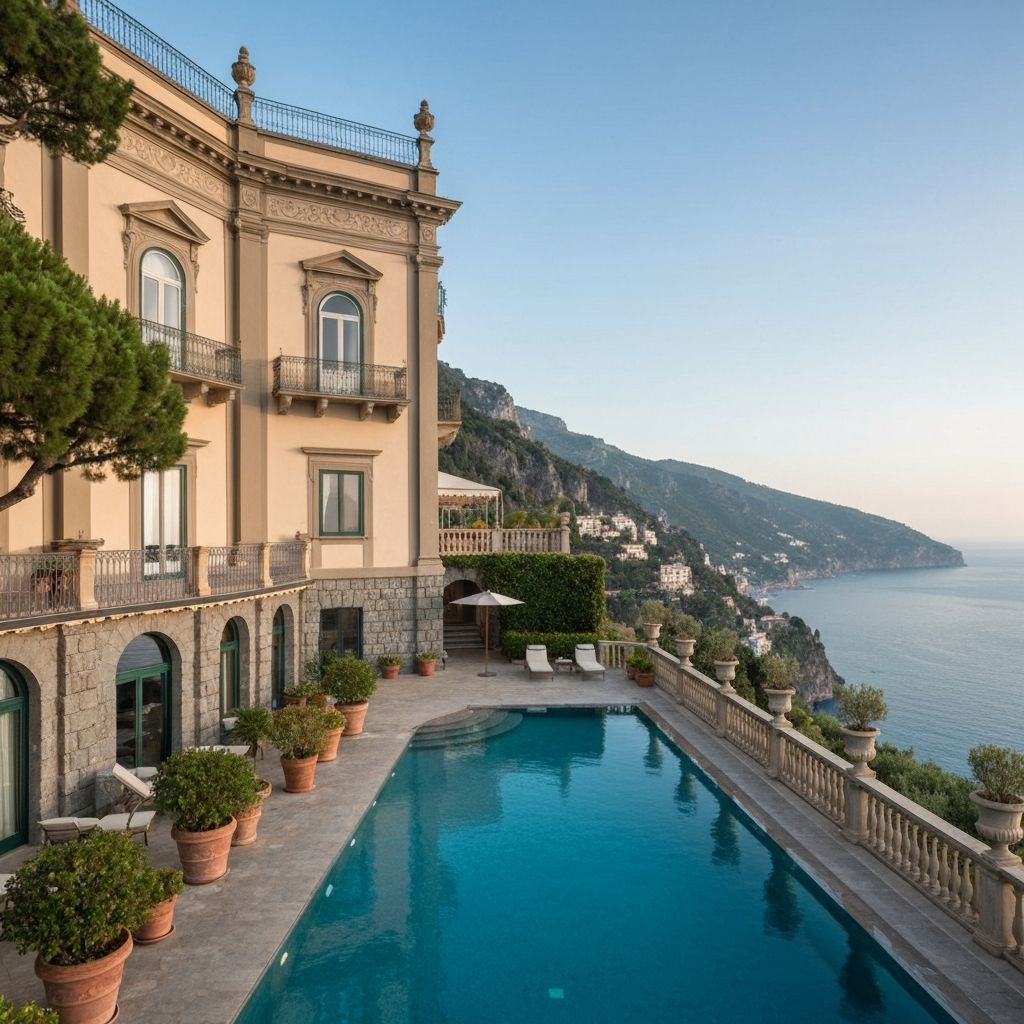
Beyond the celebrated hotels lies a parallel universe of ancestral estates accessible only through specialist agencies like Think Amalfi or Oliver's Travels. Palazzo Avino in Ravello, once the 12th-century residence of noble families, offers 43 rooms with original vaulted ceilings and a Rossellini's Michelin-starred restaurant where lobster paccheri overlooks terraced vineyards. For complete privacy, Villa TreVille in Positano—owned by the Cinque family and formerly Franco Zeffirelli's retreat—accommodates just 15 guests across suites connected by bougainvillea-draped staircases. These ultra-private villas often include dedicated staff (chef, butler, concierge), infinity pools carved into cliff faces, and boat moorings for helicopter-transfer arrivals from Naples.
The true hidden gems lie in converted convents and medieval towers. Monastero Santa Rosa in Conca dei Marini—a 17th-century cloistered convent—transformed its former nun quarters into 20 minimalist suites while preserving original majolica-tile floors and vaulted meditation chambers. The property's infinity pool seems to pour directly into the Mediterranean 100 meters below. Further east, Torre Normanna in Maiori offers a 9th-century watchtower converted into a two-bedroom sanctuary with 360-degree sea views and a roof terrace where Moorish pirates once scanned for approaching vessels. These properties typically require week-long minimum stays during summer (€35,000-70,000), but offer unparalleled privacy and the sensation of inhabiting living history rather than merely visiting it.
The Scent of Lemons: Gourmet Experiences and Michelin-star Cliffs
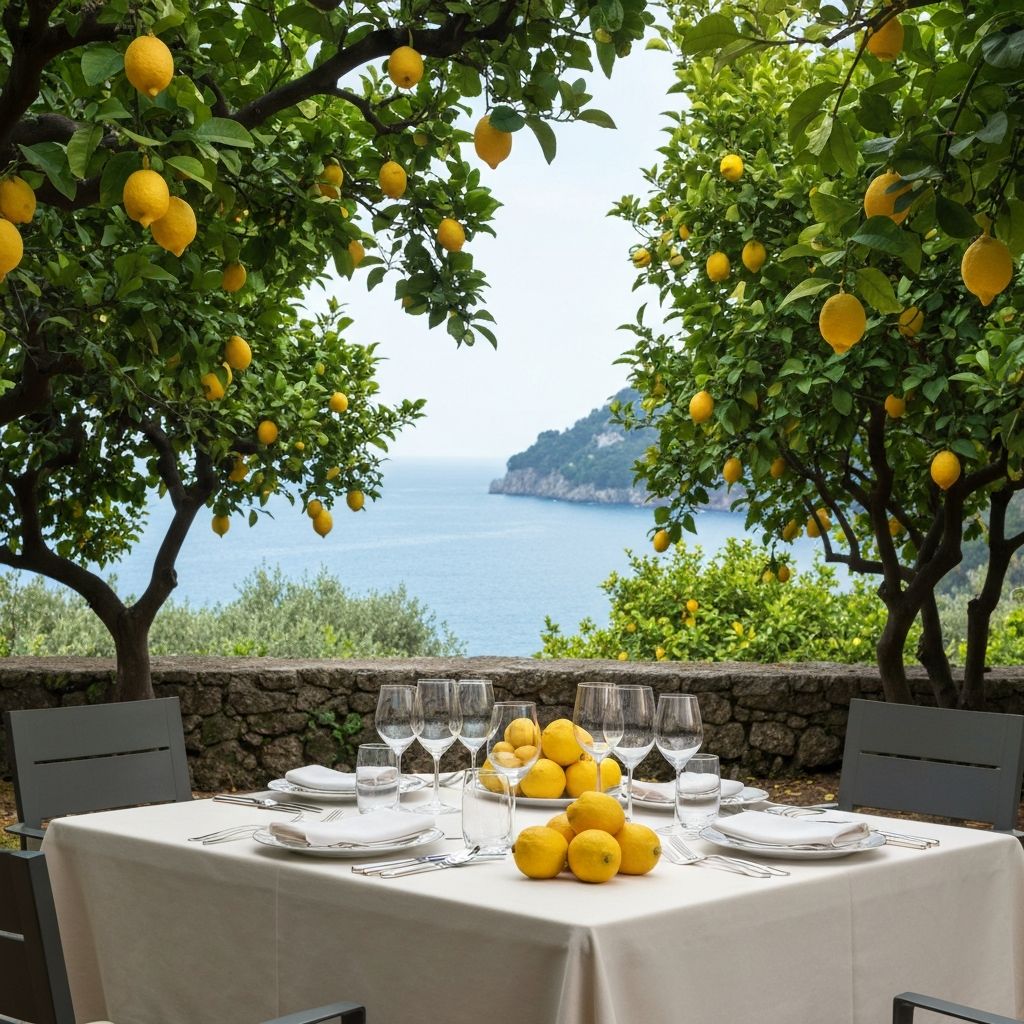
The Sfusato Amalfitano—the coast's indigenous lemon variety with IGP protected status—defines the region's culinary identity as profoundly as wine defines Tuscany. These football-sized citrus fruits, cultivated on terraced groves clinging to impossibly steep slopes, yield a thick, fragrant rind used in everything from limoncello to scialatielli al limone pasta. Michelin-starred restaurants have elevated this peasant ingredient to haute cuisine: at Quattro Passi in Nerano (2 Michelin stars), Chef Antonio Mellino's lemon leaf-wrapped sea bass showcases the terroir's aromatic complexity. Rossellini's in Ravello serves a 12-course tasting menu where each dish incorporates lemon in unexpected forms—candied peel in foie gras, zest-infused olive oil, dehydrated rind as a finishing salt.
Beyond formal dining, agriturismo experiences offer intimate encounters with working lemon groves. Proprietors like Acanto Blu in Tramonti host cooking classes in 18th-century limonaie (lemon houses) where participants harvest fruit, hand-roll cavatelli pasta, and prepare traditional dishes like torta caprese under the guidance of nonne (grandmothers) whose recipes span generations. For wedding receptions, consider booking an entire limonaia for a long-table dinner illuminated by Edison bulbs strung between citrus trees—a setup that evokes rustic authenticity while delivering world-class catering. Top wedding caterers like Renato Apicella can transform these agricultural spaces into pop-up Michelin experiences, with multi-course degustazioni paired with Campanian wines like Greco di Tufo and Fiano di Avellino served from hidden cellar collections.
Navigating the Shores: Private Yacht Chartering Guide
The Amalfi Coast reveals its most intimate secrets from the water. Sea-level perspectives expose hidden coves like Cala di Mitigliano and Furore Fjord—a narrow crack in the cliffs where emerald water meets a secret pebble beach. Private yacht charters range from classic gozzo boats (traditional 8-meter wooden vessels with cushioned sun decks) to 30-meter luxury motor yachts with crew. For wedding parties, consider a sunset aperitivo cruise: depart Positano at 6 PM, sail past Li Galli archipelago (the former isles of the Sirens), anchor off Praiano for Prosecco and local anchovies, then return as twilight illuminates the coast's tiered lights. Charter companies like Amalfi Coast Boat Tours and Exclusive Cruises offer packages starting at €800 for four hours, scaling to €4,000+ for full-day experiences with onboard chef service.
The most exclusive option: bareboat charter with a licensed captain, allowing spontaneous itinerary changes. This format enables discovering sea grottos like Grotta dello Smeraldo (Emerald Grotto) before tourist boats arrive, or arranging a private beach landing at Marina di Praia accessible only via 400 stone steps or by sea. For ultimate drama, some couples incorporate yacht arrivals into ceremony logistics—bride and groom departing separate ports, meeting for the first time as vessels converge at a designated point visible from the cliff-edge venue above. Nautical regulations require captains hold Italian maritime licenses and vessels undergo annual safety inspections; reputable charter companies carry €5 million liability insurance and provide multi-lingual crew familiar with microclimate weather patterns that can shift rapidly along the coast.
Eco-Luxury: Preserving the Heritage of the Divine Coast
UNESCO World Heritage status (granted 1997) comes with preservation mandates that shape sustainable luxury on the coast. New construction is virtually prohibited; restoration projects must use traditional materials like majolica tiles from Vietri sul Mare and limestone quarried from historical sites. This constraint has birthed a new generation of eco-conscious hospitality that reimagines heritage architecture with contemporary sustainability. Monastero Santa Rosa generates 40% of its energy via solar panels discreetly integrated into roof tiles, while greywater systems irrigate terraced gardens with reclaimed water. The property's organic kitchen garden supplies 60% of restaurant ingredients, and single-use plastics have been eliminated in favor of glass and ceramic service ware.
For couples planning sustainable celebrations, consider partnering with local cooperatives like Salvatore De Riso in Minori, whose pasticceria sources ingredients exclusively from Amalfi Coast producers—organic lemons from Amalfi, hazelnuts from Giffoni, buffalo mozzarella from Paestum. Transportation eco-consciousness means minimizing vehicle trips via strategic guest lodging clusters and offering electric Ape Calessino shuttles (three-wheeled Italian tuk-tuks) for short transfers. Floral design should emphasize seasonal, locally-grown blooms over imported roses; June weddings can feature wild poppies and broom flowers, while September offers oleander and dahlias. The ultimate sustainable gesture: donating ceremony flowers post-event to local churches and elder care facilities, a tradition that connects contemporary celebration to community continuity across generations.
The Amalfi Coast operates on its own temporal logic, where thousand-year-old footpaths still define the rhythm of daily life and citrus harvests dictate seasonal celebrations. Unlike destinations designed for tourism, this coastline absorbs visitors into its living culture—you don't merely visit Amalfi, you participate in its vertical choreography of terraced gardens, maritime traditions, and cliff-suspended existence. Whether orchestrating a wedding that honors Byzantine opulence or seeking a retreat that balances Renaissance grandeur with contemporary comfort, success lies in embracing the coast's essential paradox: it is simultaneously a monument to human ambition (those gravity-defying villages) and a testament to nature's supremacy (the cliffs that dictate every architectural decision). In surrendering to this vertical elegance, you discover the profound luxury of place-making—not as conquest, but as collaboration between stone, sea, and ceremony.
Rate This Experience
Your feedback helps us curate exceptional content