There is a particular quality of light that exists only in the Cyclades at the edge of afternoon—a white that is not quite white, a blue that has no adequate name in English. It falls across stone walls and vanishes into the sea with a casualness that seems almost deliberate, as though the islands have practiced their beauty for ten thousand years and are no longer trying.
The well-traveled visitor to the Greek archipelago knows Santorini's caldera and Mykonos's cobblestones. But the true connoisseur of slow luxury—the traveler who understands that the finest experiences are measured not in spectacle but in texture—turns east and south toward the lesser Cyclades, where goat bells replace DJ sets, where monasteries cling to cliffs above seas that have never heard of social media, and where the word "retreat" still means something sacred.
This is a guide to those islands. It is written for the traveler who has grown weary of the curated and the conspicuous—who seeks the Aegean not as a backdrop but as a teacher.
The Cliffside Monasteries of Amorgos: Luxury at the Edge of the World
Amorgos is the island that the French filmmaker Luc Besson chose as his muse for The Big Blue, and there is something in that choice that communicates the island's essential character: it is vast, vertiginous, and almost violently beautiful. The island stretches for forty kilometers yet is barely five kilometers wide, creating a ridge of ancient schist that drops—sometimes sheer, sometimes in terraces of wild thyme and asphodel—to water that shifts from jade to ultramarine depending on the hour.
The Monastery of Hozoviotissa is Amorgos's defining image: a white tower of buildings built directly into the face of a 300-meter cliff above the sea, accessible only by a steep stone path of 300 steps. Founded in the ninth century, it contains a miraculous icon of the Virgin and a small museum of Byzantine treasures. Visitors are received in the traditional spirit of Greek hospitality—offered loukoumades, raki, and a seat above the abyss—and the experience of ascending to it in the early morning, before the heat gathers, is among the most quietly transformative acts available to the modern traveler.
For accommodation, the boutique properties of Aegiali and Katapola have refined their offering considerably in recent seasons. Seek out the cave-hewn villas cut into the hillside above Aegiali Bay, where the stonework is original and the views extend to the edge of visibility. The finest of these offer private plunge pools fed by spring water, handwoven linens sourced from neighboring Naxos, and menus built around the island's extraordinary wild greens—horta gathered that morning from the terraced hillsides above.
The luxury of Amorgos is not in its amenities—though these have grown quietly exceptional—but in its resistance to spectacle. The island asks you to slow down by simply offering you nothing else to do. Hiking the ancient footpaths between villages, swimming in coves accessible only by boat, sitting with a carafe of local wine as the day's final light turns the cliff face to amber: these are the experiences that leave the deepest impressions.
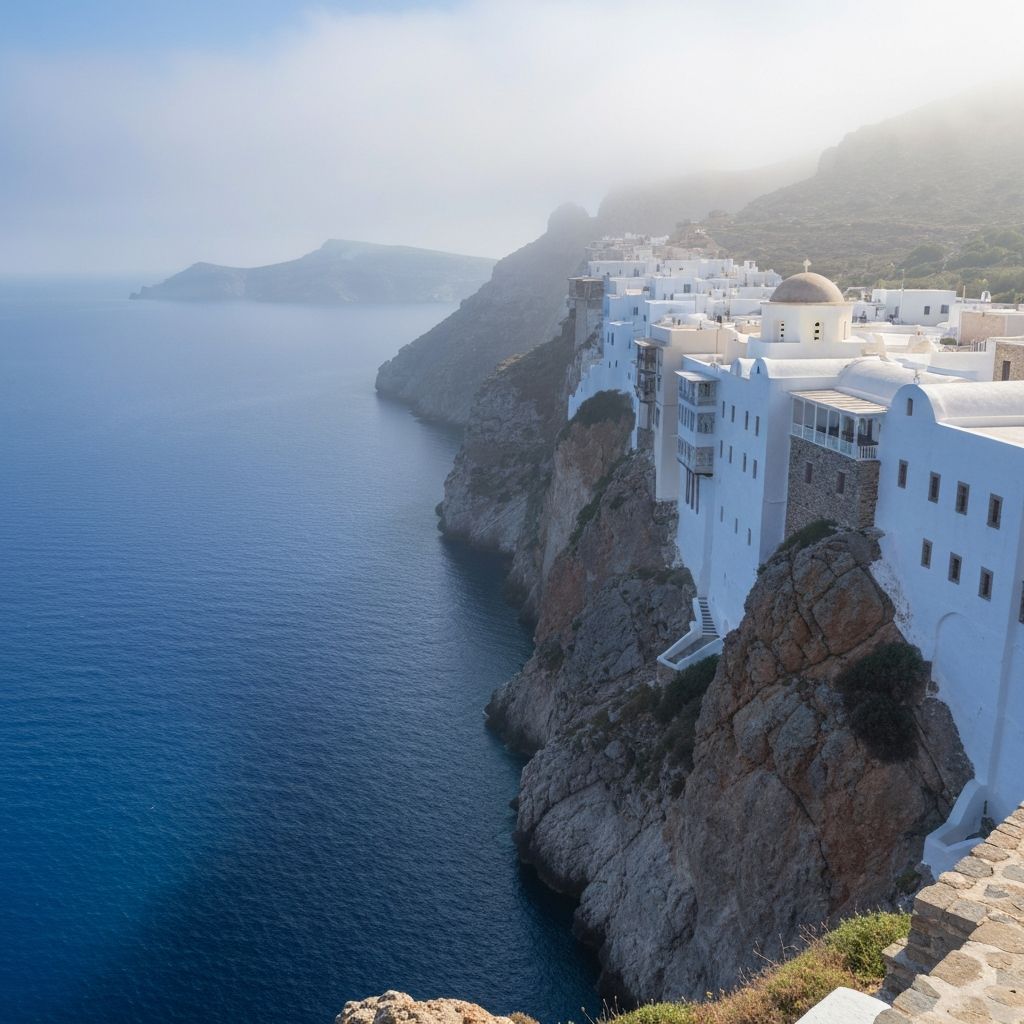
Hozoviotissa Monastery, Amorgos — where stone and sea become one continuous gesture
Milos's Volcanic Sanctuaries: Where the Earth Meets the Water
Milos is a geologist's paradise and a photographer's fever dream. The island is the remnant of a collapsed volcanic caldera—which is why its coastline is defined not by the gentle curves of limestone but by the abrupt drama of volcanic tuff sculpted by millennia of wind and salt into arches, sea caves, and formations of impossible color. The famous beach of Sarakiniko, with its lunar white pumice formations and its turquoise coves, has become known to a wider world in recent years, but Milos contains multitudes that the Instagram grid cannot capture.
The island's geothermal wealth means that its waters are warm even in October—a secret that the sailing fraternity has guarded jealously. Charter captains based in Adamas know the hidden coves of Kleftiko, accessible only by sea, where the water glows a green so intense it seems artificially lit. A private sailing charter from Milos, provisioned with the island's distinctive capers, local cheese, and the white wine of the volcanic soil, constitutes one of the Aegean's most complete luxury experiences.
For those who prefer their luxury horizontal, the hillside villas above Plaka—the island's hilltop capital—offer rooms carved from volcanic stone and painted in the particular deep white of Cycladic tradition. The finest properties here have incorporated the island's natural hot springs into their wellness offerings, providing guests with private thermal bathing in pools that look directly out to the Cretan Sea. Thermal treatments using the island's volcanic clay are offered by several properties as signature spa experiences, their mineralogy as ancient as the island itself.
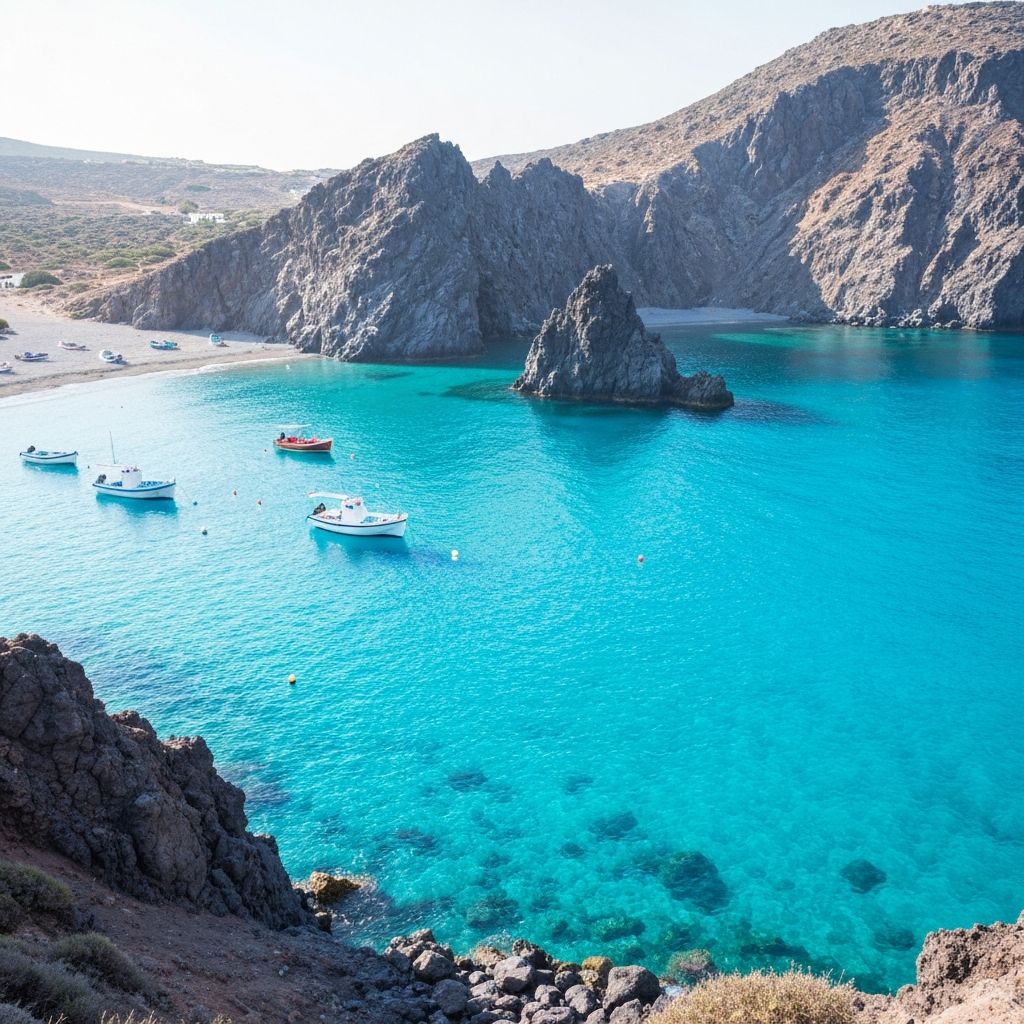
Milos, Greece — the volcanic palette that no filter can improve upon
Sifnos's Gastronomic Hideaways: The Art of the Cycladic Table
Sifnos occupies a singular position in the Greek culinary imagination. The island has produced, proportionally, more professional chefs than any other place in the country—a fact that the Sifniots attribute to a combination of isolation, terroir, and the particular stubbornness of island character. The tradition of slow cooking in the island's ceramic pots, placed overnight in the communal ovens of the village bakeries, has been practiced without interruption for centuries. To eat revithada—the slow-cooked chickpea stew of Sifnos—prepared in this manner, in a courtyard above a village church, with local thyme honey and fresh bread, is to understand what food can be when it is not trying to be impressive.
The island's luxury accommodation has developed in thoughtful alignment with this culinary identity. Several properties offer dedicated cooking experiences—not the performative "masterclass" of resort gastronomy, but genuine apprenticeships in Cycladic cuisine: shopping at the morning market in Apollonia, preparing the day's meals with local cooks using produce from the hillside terraces, eating at a table set with the island's renowned hand-painted pottery. The experience is intimate, unscripted, and deeply nourishing in ways that five-course tasting menus rarely achieve.
The village of Kastro—the island's medieval capital, perched on a rocky promontory above the eastern sea—contains some of the finest small hotels in the Cyclades, their rooms set within restored medieval houses whose thick walls maintain a natural coolness even in August. From the ramparts of Kastro, the view extends without interruption to the horizon, and on clear evenings you can see the distant outline of Paros, forty kilometers to the north.
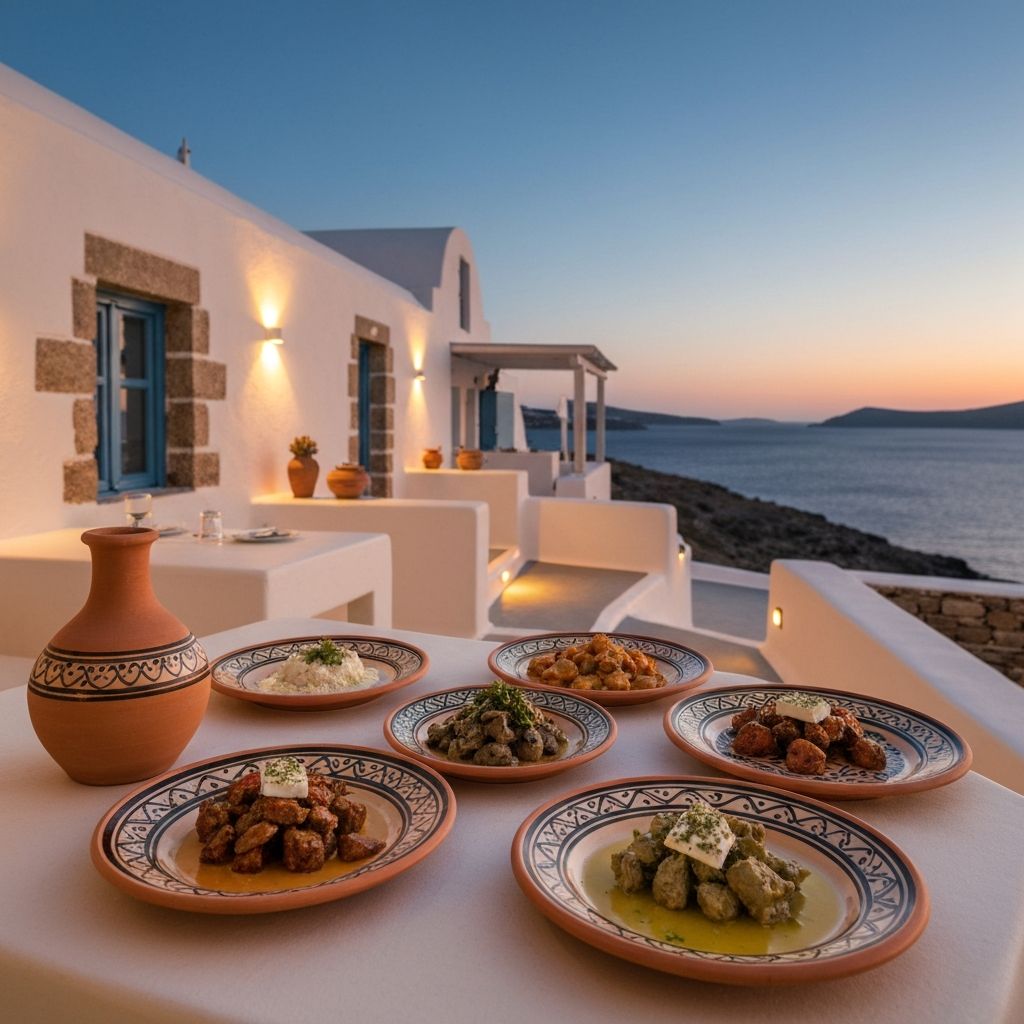
Sifnos, Greece — where every meal is a conversation with the earth
Folegandros's Untouched Grace: The Island That Time Forgot to Ruin
Folegandros is the island that other Greek islanders recommend when they want to share a secret. With a permanent population of fewer than 700 people and no airport, it receives its visitors exclusively by ferry, a selective process that effectively filters out a certain kind of tourist. The island has no casino, no waterpark, no beach clubs with imported DJs. What it has instead is something increasingly rare and consequently increasingly valuable: the texture of an island life that has continued on its own terms.
The Chora of Folegandros—the island's main village—is classified among the most beautiful in Greece. It occupies the summit of a 300-meter cliff that falls directly to the sea, its cubic white houses and cobblestone squares forming a composition of such apparent simplicity that it takes several visits to appreciate its sophistication. The Church of Panagia, perched at the highest point and reached by a steep path through terraced gardens, offers a view that encompasses the entire southern Aegean on clear days.
The island's finest accommodation—a collection of small boutique properties, none with more than twenty rooms—has been developed by local families who understand that the island's appeal is precisely what it lacks. The best of these offer rooms whose stone walls and wooden ceilings are original, furnished with locally sourced textiles and ceramics, their terraces positioned to catch the morning light as it moves across the cliff face. The sense of having arrived somewhere that is not performing for you—that would exist in exactly this form whether you were here or not—is the most luxurious sensation the Aegean can offer.
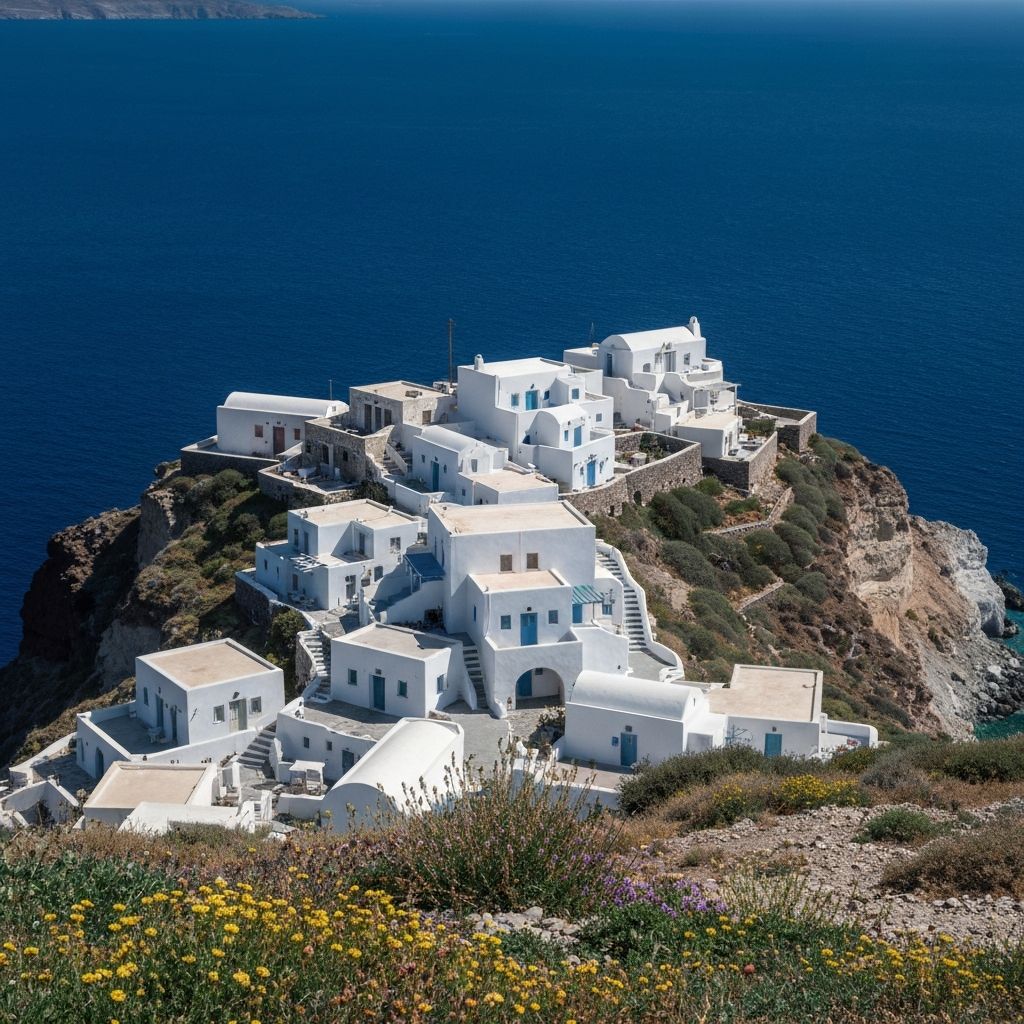
Folegandros, Greece — the Cyclades as they were before the world discovered them
The Architecture of Slow Luxury: Finding the Perfect Cycladic Villa
The defining aesthetic of Cycladic architecture—those forms so radical in their simplicity that Le Corbusier studied them obsessively—is not, as it might appear, an expression of poverty. It is an expression of a profound understanding of environment: buildings designed to reflect heat, to channel cooling winds, to collect rainwater, and to dissolve visually into the landscape of white rock and blue sky. The best contemporary luxury properties in the lesser islands have understood this and built within this tradition rather than against it.
When selecting a villa or boutique property on these islands, certain criteria distinguish the genuinely exceptional from the merely expensive. Stone construction—not applied render but actual island stone—provides thermal mass that no air-conditioning system can replicate. Traditional vaulted ceilings, the distinctive architectural feature of the Cyclades, create interior volumes that breathe. Positions on hillsides or cliff edges, rather than beachfront, provide wind access that maintains natural comfort through even the hottest weeks of July.
The finest properties on these islands tend to offer fewer rooms than their Mykonos equivalents, charge similar rates, and provide an experience that is incomparably more intimate. Staff-to-guest ratios at the best smaller properties can reach one-to-one, not because of deliberate hospitality theatre but because the properties are genuinely small. The cook who prepares your dinner may also be the person who collected the wild herbs that morning.
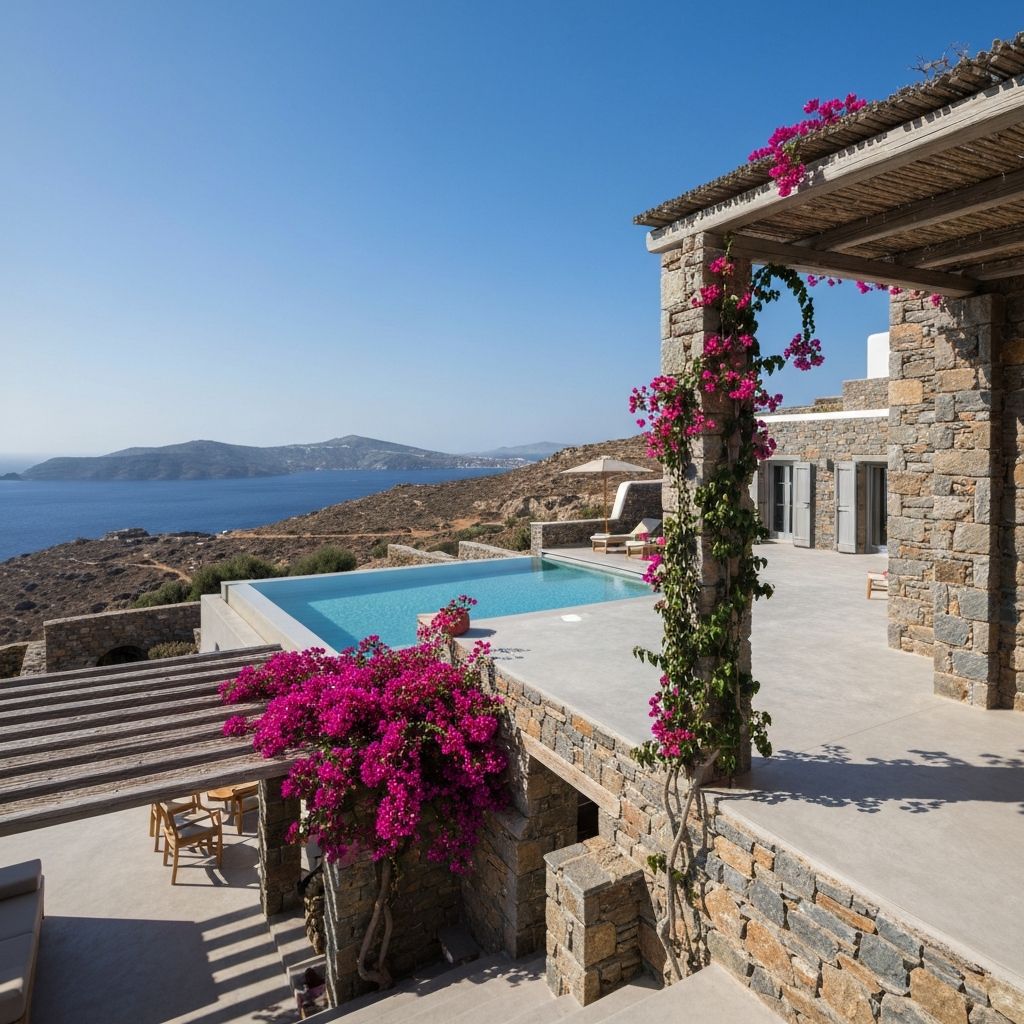
A private Cycladic villa — where architecture and landscape negotiate in silence
The Rhythms of the Aegean: Sailing, Swimming, and the Sacred Art of Doing Nothing
The most thoughtfully appointed villa in the Cyclades is ultimately a frame around the Aegean itself, and the sea must be experienced directly to understand why these islands inspire the particular depth of attachment that they do. Sailing between the lesser Cyclades—aboard a private gulet or a traditionally rigged caïque, with a captain who knows these waters by instinct rather than GPS—is one of the world's great travel experiences. The islands reveal themselves differently from the sea: Amorgos's cliff face at dawn, the volcanic arches of Milos at midday, Folegandros's Chora floating above its cliff in the evening light.
Swimming in the Aegean is a practice distinct from swimming in other seas. The water is unusually clear and unusually saline—more buoyant, more responsive to light—and the experience of floating in a protected cove with the island's white walls rising above you is a form of meditation that requires no instruction. The ancient Greeks understood the sea as divine, and something of that understanding persists in the experience of swimming in these specific waters.
The discipline of doing nothing—of sitting at a table with a coffee as the morning moves across the wall, of watching the light change on the water through an afternoon, of sleeping in the heat and waking to walk in the cool—is the Cycladic contribution to the philosophy of travel. It requires a particular kind of permission, which these islands have always been generous in granting.
Expand Your Horizon: From Greek Shores to the World's Finest Celebrations
The quiet philosophy that the lesser Cyclades embody—that true luxury is a quality of attention rather than expenditure—finds its echo in sanctuaries far beyond Greece. If the sea is your element, our Coastal Vows: World Beach Wedding Destinations guide traces the same philosophy through Seychelles, Fiji, Hawaii, and Tulum—exploring how different cultures have made ceremonies of the meeting between land and water. For those drawn to the monumental weight of history, our guide to Europe's Most Ethereal Luxury Castle Retreats follows the same instinct for the deeply made and the historically resonant across Ireland, France, Scotland, and Tuscany.
The Cyclades teach, ultimately, that the most transformative journeys are those that ask something of you in return—that require you to adapt your pace to their pace, your light to their light. The islands we have described are not passive backdrops. They are presences, with their own weather and their own logic, and the traveler who is willing to be instructed by them will return changed in ways that are difficult to articulate and impossible to photograph.
From the Aegean with Love
Receive Whispers from the Shore
Let the tide bring you our most intimate travel dispatches—hidden coves, secret monasteries, and the quiet art of slow luxury.
A Final Note on the Colour Blue
The ancient Greeks, famously, had no word for blue. Homer described the sea as "wine-dark," and scholars have long debated what this implies about the Greek perception of colour. But anyone who has sat above the Aegean in the late afternoon, watching the water move through its register from turquoise to cobalt to indigo as the light descends, will suspect that the Greeks did not lack a word for blue because they could not see it—but because no single word was adequate. The sea at Amorgos, at Milos, at Folegandros is not one colour. It is a sustained argument about the nature of colour itself, conducted at a scale and with a patience that leaves the observer humbled and grateful and, for a time, entirely content.
This is what the hidden islands of the Greek Cyclades offer the traveler who knows to seek them: not the blue of the postcard, but the blue of direct experience—particular, unrepeatable, and belonging entirely to the moment in which it is perceived. That, in the end, is the definition of luxury that these islands have been quietly proposing for three thousand years.
Rate This Experience
Your feedback helps us curate exceptional content