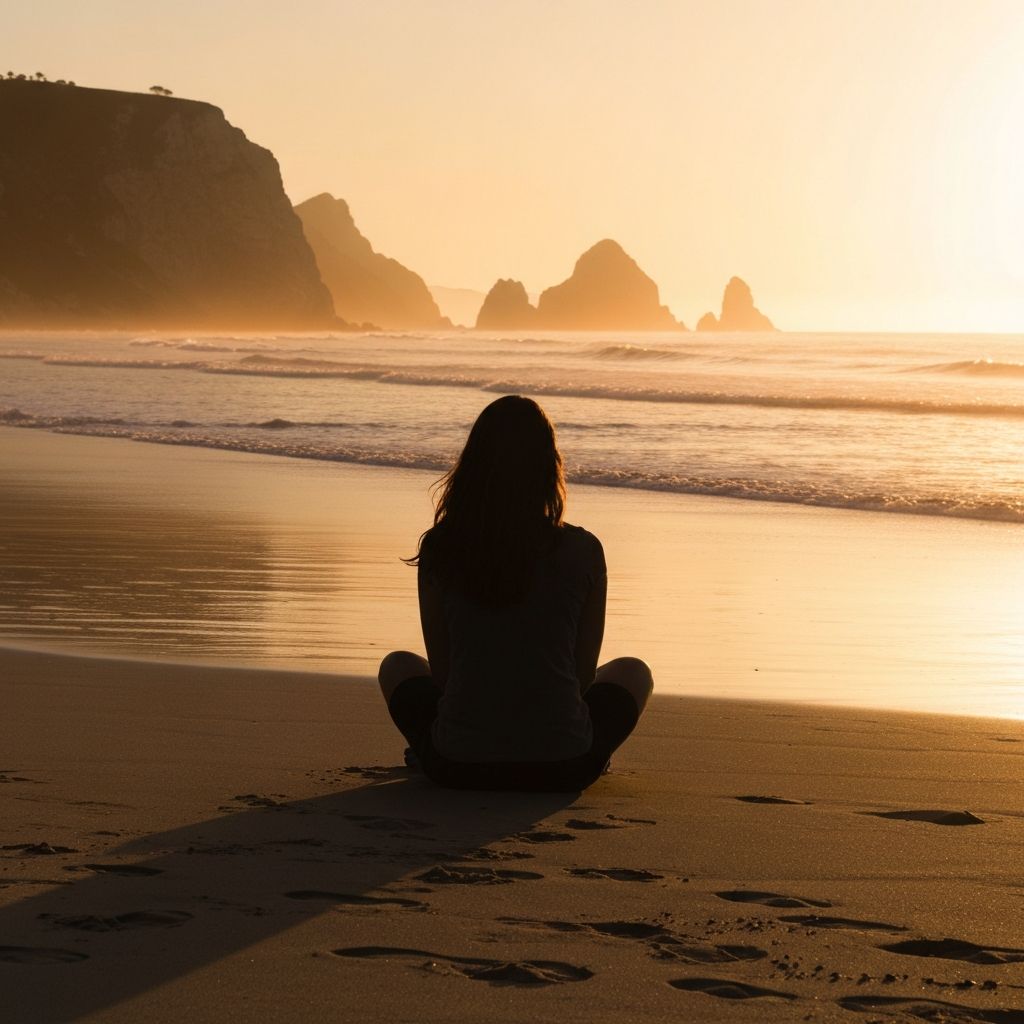
There is a particular kind of courage required to stand at the edge of the ocean alone — to offer yourself, without the buffer of companionship or itinerary, to the conversation that the sea is always ready to begin. The solo beach traveler understands something that group travel rarely permits: that the most profound discoveries unfold not in the company of others, but in the patient, unhurried company of oneself.
The world's most ethereal coastal destinations have long drawn solitary seekers — artists, philosophers, healers, and wanderers who recognized in the rhythm of waves a language that speaks most clearly when the noise of ordinary life recedes. This guide is written for the traveler who is not simply going somewhere, but going to themselves — using the beach, and the particular quality of attention that the ocean demands, as the instrument of that return.
What follows is a curation of four destinations that have each, in their own way, perfected the conditions for solo transformation: where the spiritual infrastructure, the physical landscape, and the quality of solitude align to create the rarest of travel experiences — one that changes you.
Tulum, Mexico: Where Ancient Stillness Meets the Caribbean Sea
Tulum occupies a stretch of Mexico's Yucatán coastline where the Caribbean meets the oldest continuously inhabited landscape in the Americas. The Mayan ruins that crown the town's northern bluff — the only pre-Columbian city built directly above the sea — are not merely a backdrop. They are a presence, visible from the water, from the beach, from the yoga platforms of the palapa hotels that line the Zona Hotelera, always reminding the visitor that this land has been understood as sacred for more than a thousand years.
For the solo traveler with a philosophical orientation, Tulum offers a spiritual infrastructure that is genuinely rare. The town's cenotes — those extraordinary underground freshwater pools formed by the collapse of limestone bedrock above subterranean rivers — are among the most otherworldly natural phenomena on earth. Cenote Dos Ojos, Cenote Calavera, and the deeper systems accessible only by guided dive present the swimmer with a visual experience that confounds ordinary perception: hanging stalactites, shafts of light descending from surface openings fifty meters above, fish that have evolved in complete darkness. To float alone in the silence of a cenote, suspended between the ancient ceiling of the earth and the ancient floor of the sea, is to understand scale in a way that alters the relationship between self and world.
The beach yoga culture that has developed in Tulum is, at its best, a genuine spiritual practice rather than a wellness trend. Several retreats along the Zona Hotelera offer immersive morning programs combining asana with breathwork and meditation sessions that begin before dawn — timing the practice to coincide with the first light over the Caribbean, so that the practitioner faces east as the horizon brightens, the sea moving from black to indigo to the particular turquoise that is Tulum's signature. The solo traveler who arranges their mornings around this practice, and their afternoons around the unhurried exploration of jungle and coast, will find Tulum generous in its capacity for transformation.
For accommodation, the most conducive to genuine solitude are the smaller boutique properties set directly on the beach, their palapa structures providing shade without walls, their absence of televisions and air-conditioning compelling the guest into relationship with the natural environment rather than against it. A hammock strung between palms above the sand, a copy of something dense and beautiful, and the Caribbean horizon: this is Tulum's essential luxury offering, and it is both freely available and deeply restorative.
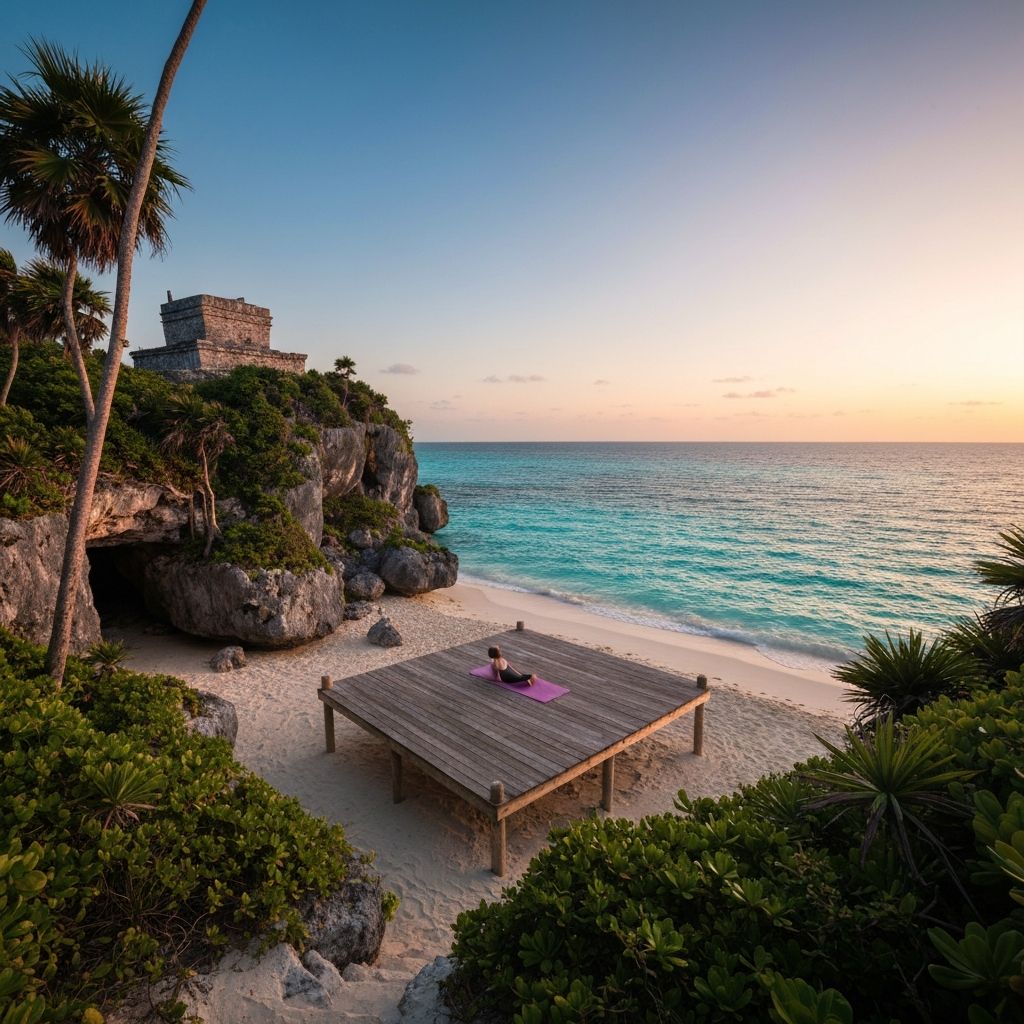
Tulum, Mexico — where the Maya knew to build their city above the sea
Uluwatu, Bali: Cliffside Contemplation and the Ritual of the Setting Sun
The Bukit Peninsula — the limestone plateau that forms Bali's southern tip — operates by different rules than the rest of the island. Where the rice-terraced heartland of Ubud offers lush green interiority, and the resort towns of Seminyak offer sophisticated sociality, Uluwatu offers something starker and more demanding: sheer cliffs, a horizon uninterrupted to Australia, and the particular quality of wind that blows continuously from the Indian Ocean and makes it impossible to feel entirely contained within the ordinary dimensions of experience.
The Uluwatu Temple — Pura Luhur Uluwatu — clings to a promontory seventy meters above the ocean, and its daily Kecak fire dance at sunset draws visitors who come for the spectacle but stay, unwittingly, for something more. The Kecak ceremony — performed by a chorus of men whose rhythmic chanting creates a sound that seems to arise from the cliff itself — was developed in the 1930s from a Balinese trance ritual, and its theatrical version retains enough of the original ceremony's spiritual charge to affect even the most secular observer. To watch it alone, standing slightly apart from the assembled crowd as the sun descends toward the horizon and the chanting intensifies, is an experience of unusual emotional resonance.
The solo traveler at Uluwatu has access to a landscape that accommodates both activity and contemplation in equal measure. The peninsula's cliff-base beaches — Padang Padang, Bingin, Impossible — are accessible by steep staircases cut into the rock and offer consistent surf conditions that have drawn serious surfers for decades. For the non-surfer, these beaches provide something equally valuable: genuine seclusion. The difficulty of access means that the crowds that pack more accessible beaches rarely descend to Bingin at dawn or Impossible in the late afternoon, leaving the solo visitor with stretches of white sand, the sound of breaking waves against the cliff base, and the companionship of the horizon.
The cliff-top accommodation along Uluwatu's edge has matured into some of Indonesia's finest: small boutique properties with infinity pools suspended above the ocean, open-sided rooms that dissolve the boundary between interior and sky, and the sound of waves as constant company. The solo traveler in such a room, with breakfast delivered to a terrace above the Indian Ocean, and nothing required of the day but whatever the day offers, is in the presence of something that the travel industry rarely delivers with such completeness: genuine freedom.
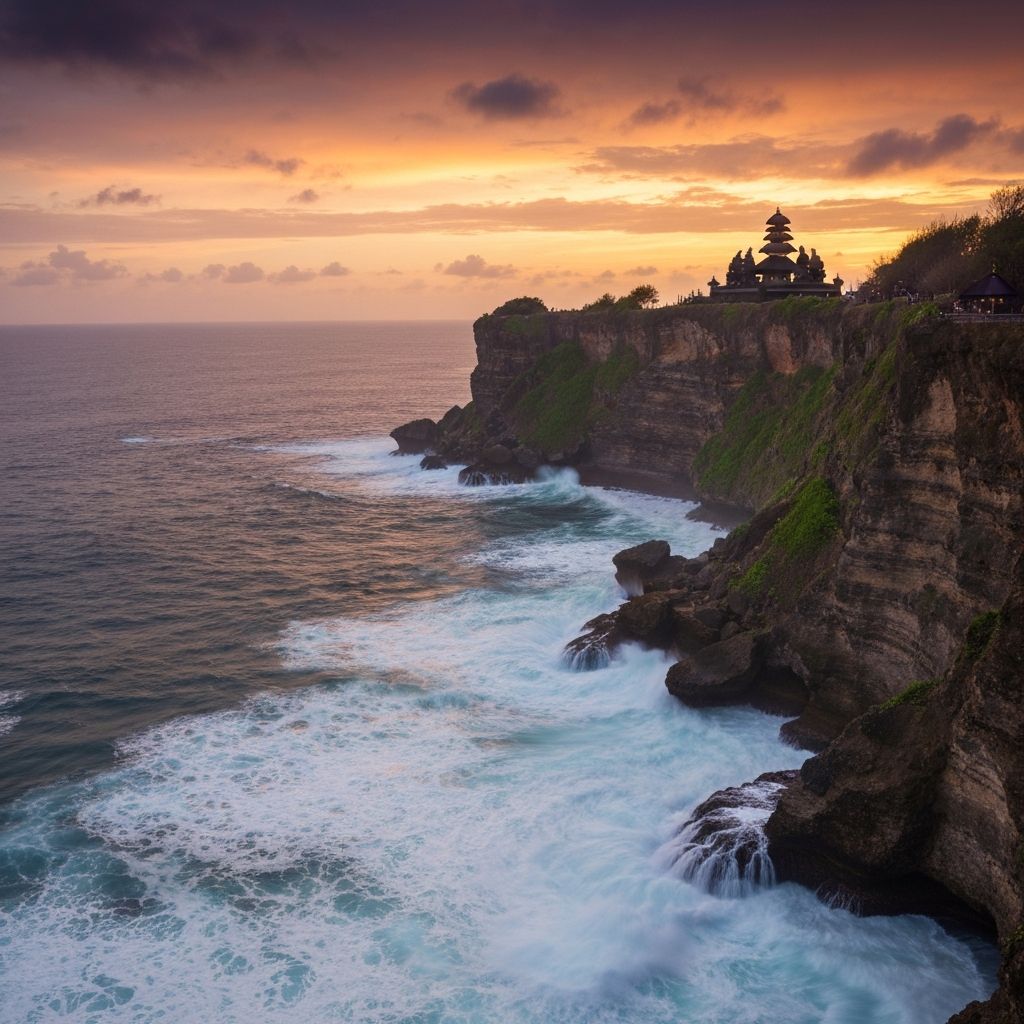
Uluwatu, Bali — seventy meters above the Indian Ocean, at the edge of ordinary life
The Algarve, Portugal: Long Walks and the Philosophy of Golden Stone
Portugal has always understood something about melancholy that other countries have preferred to avoid — the particular emotional register known as saudade, a longing for something that may never have existed, a tenderness toward loss itself. It is not surprising, then, that the Algarve — the country's southernmost coastline, where the warm waters of the Mediterranean give way to the cooler, wilder Atlantic — should be among the world's finest destinations for the solo traveler who comes not to escape their inner life, but to deepen their acquaintance with it.
The cliffs of the Algarve are among the most visually extraordinary landforms in Europe: towers and arches and cathedrals of golden sandstone, sculpted by a combination of Atlantic erosion and geological time into forms that seem almost architectural in their complexity. The beaches at their base — Praia da Marinha, Praia do Camilo, Praia do Carvalho — are accessible only by steep paths cut through the cliff or, in some cases, through sea-caves navigable at low tide. This inaccessibility is their gift. The beaches of the western Algarve, even in the height of summer, retain pockets of genuine solitude precisely because they require effort to reach.
The Rota Vicentina — a network of walking trails that traverses the western Algarve and Alentejo coastline — offers the solo walker one of Europe's most rewarding long-distance experiences. The Fishermen's Trail section follows the coast so closely that the walker is often within meters of the cliff edge, the Atlantic breaking on the rocks below, the scent of lavender and wild rosemary released by every footstep. Sections can be walked independently between village aubergistes, making this one of the few truly self-directed coastal pilgrimages available to the European traveler. To walk it alone — rising early, choosing the day's pace and stopping points, eating simply in fishing villages that have not yet been transformed by tourism — is to experience a quality of freedom that conventional resort holidays cannot approach.
For the solo traveler who prefers stillness to motion, the western Algarve's boutique properties — many of them converted farmhouses or quinta estates set among cork oak forests behind the dunes — offer a context for contemplation that the more developed eastern coast cannot provide. The absence of organized entertainment, the evenings spent with local wine and the particular sound of wind through eucalyptus, the mornings when mist lies over the coast road: these conditions do not suit every traveler, but for those who are ready for them, they constitute a form of luxury that is not available in any resort catalogue.
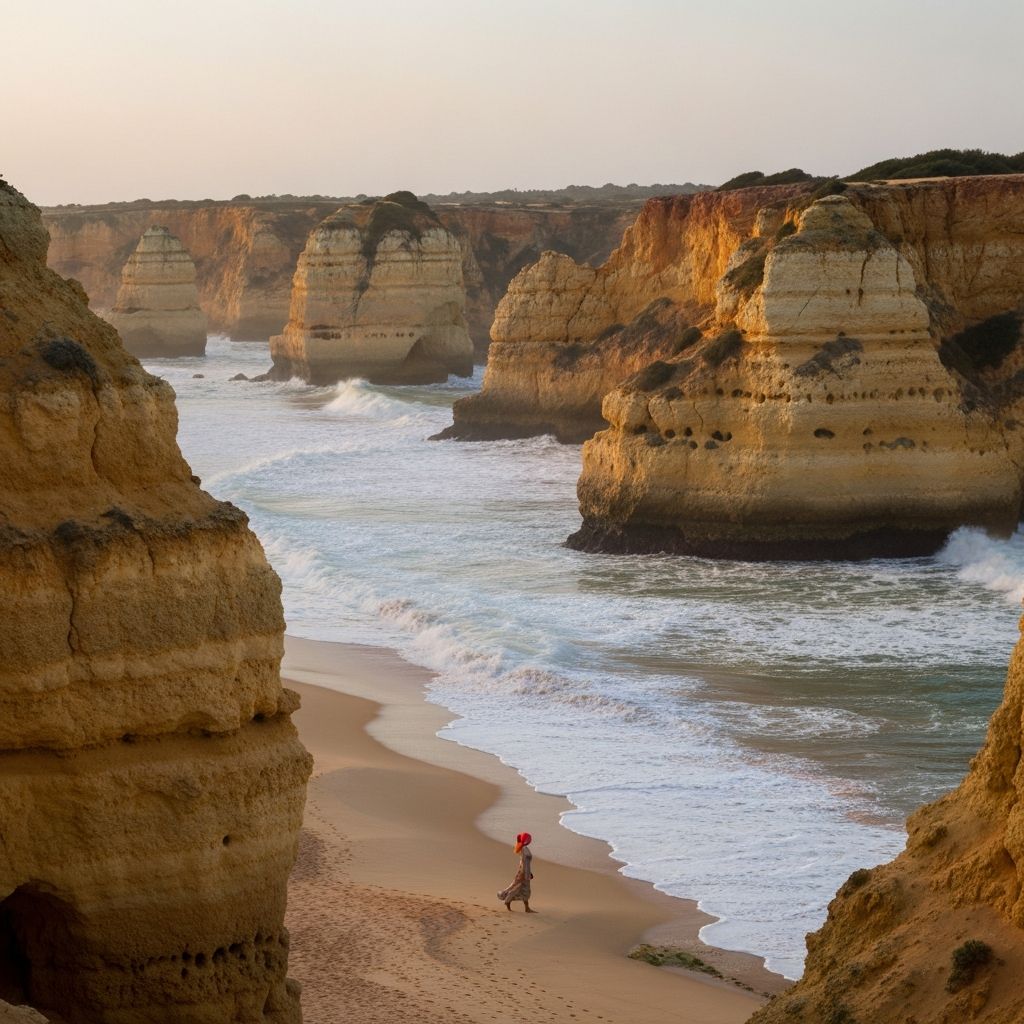
The Algarve, Portugal — where the Atlantic has been sculpting its argument in golden stone for millennia
Byron Bay, Australia: Mindful Surfing and the Holistic Coastal Life
Byron Bay occupies the easternmost point of the Australian continent — the first place on the landmass to receive the day's light — and there is something in this geographical fact that has always attracted people who are interested in new beginnings. The town's evolution from fishing village to countercultural refuge to international wellness destination has been much documented and occasionally lamented, but the essential quality that drew each successive wave of seekers remains: a combination of consistent Pacific waves, a hinterland of subtropical rainforest, and a community that has organized itself around the proposition that physical, spiritual, and ecological health are aspects of the same project.
For the solo traveler, Byron Bay offers a particular form of social ease — a culture that is accustomed to individuals arriving alone and finding their own rhythm. The surf schools that line the main beach offer beginner courses that are genuinely instructive rather than merely entertaining, and the experience of learning to surf as an adult solo traveler — of submitting oneself to instruction, to repeated failure, to the physical education of the ocean — is one that has reshaped the self-understanding of a remarkable number of people who arrived expecting only a holiday.
The walk to Cape Byron Lighthouse — the most easterly point in Australia — is one of the great short coastal walks in the Southern Hemisphere. The path rises from the town through banksia scrub and rainforest edge, the Tasman Sea appearing and disappearing through the trees, before arriving at the headland where the lighthouse has stood since 1901. On winter mornings between June and October, the headland offers front-row viewing of humpback whale migration — pods of up to twenty animals passing close enough to count their breaths. To watch this alone, in the early morning quiet before the day-trippers arrive, is an experience that realigns the scale of one's concerns with useful precision.
The hinterland villages of Mullumbimby and Federal offer the solo traveler an alternative to the beach-town energy of Byron itself: farmers' markets on weekend mornings, small community yoga studios, cafes where the coffee is sourced and the conversation is genuine. The retreat centres of the Byron hinterland — several of which offer week-long programs in vipassana meditation, somatic therapy, or plant medicine integration — are among the most carefully run in the world, and the solo traveler who extends their stay to include such a program will find that Byron Bay reveals depths that the beach alone cannot provide.
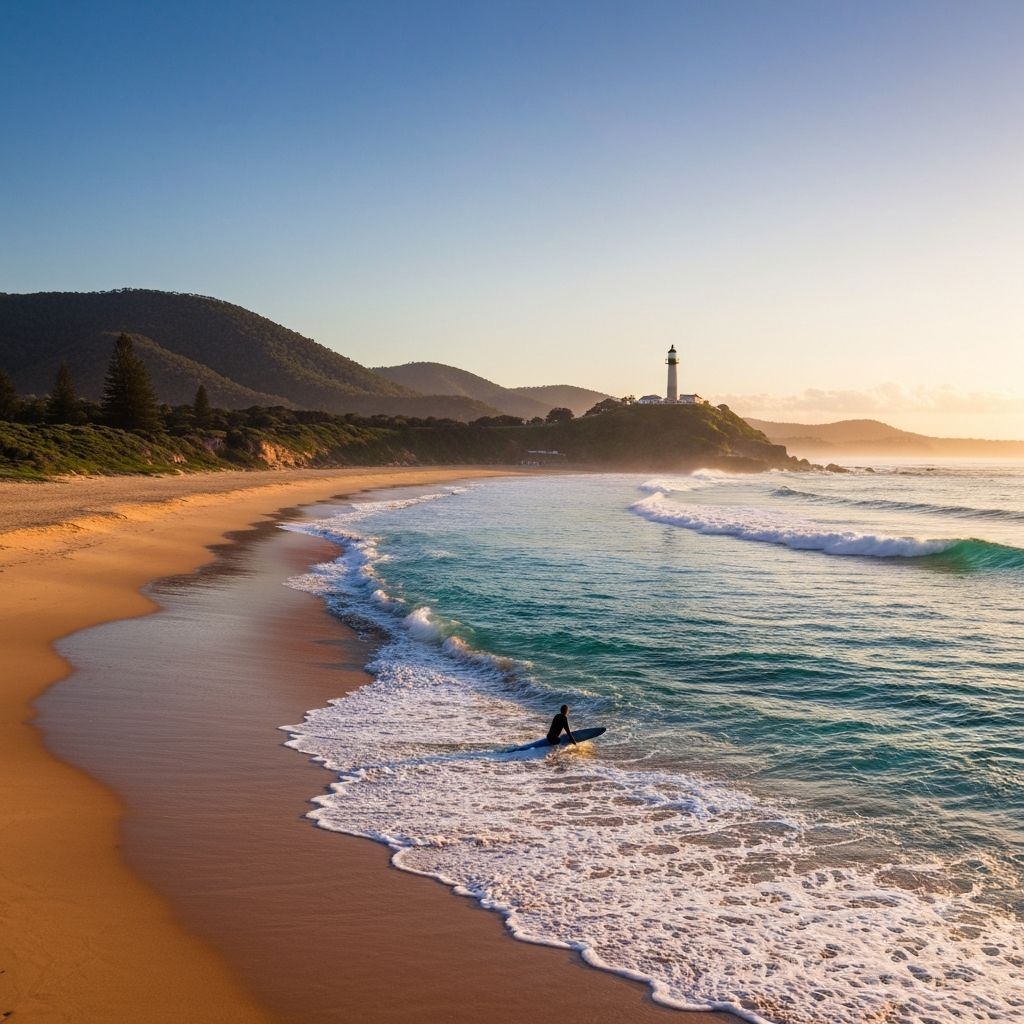
Byron Bay, Australia — the first light on the continent, and the ongoing education of the sea
The Practice of Solo Travel: A Philosophy for the Independent Shore
Solo beach travel is not merely the absence of a companion. It is a distinct mode of being in the world — one that demands and rewards a quality of attention that the logistics of group travel rarely permit. Without the management of another person's experience, the solo traveler is free to calibrate their day entirely according to their own interior weather: to stay at a café table for two hours because the morning light on the water is doing something interesting; to change plans entirely because a conversation with a local fisherman suggests a cove that no guidebook has indexed; to sit at the ocean's edge at dusk until the last light is gone, with no one to consult about dinner.
The practical wisdom that experienced solo beach travelers accumulate tends to converge on a few principles. The first is slowness: solo travel rewards the traveler who moves through fewer places with greater attention rather than attempting the comprehensive itinerary. The second is openness: the solo traveler who arrives with a fixed agenda will miss the spontaneous encounters — the invitation to a family dinner, the boat trip with a crew of local fishermen, the dawn walk with a fellow guest who turns out to have spent thirty years studying exactly the question you arrived asking — that constitute the medium through which travel actually changes people. The third is trust: trust in the ocean's rhythm as a daily framework, trust in the body's intelligence about rest and movement, trust that the day will offer what is needed.
Each of the four destinations in this guide has understood these principles and organized its offer accordingly. Tulum's cenotes and dawn yoga; Uluwatu's cliff-edge ceremonies and swell-reading mornings; the Algarve's walking trails and wine-dark evenings; Byron Bay's lighthouse walks and learning curves — these are not attractions but invitations, extended to the solo traveler who is willing to bring enough of themselves to the encounter.
Continue the Journey: More Ethereal Shores Await
The solo traveler who has found their rhythm on these shores may wish to extend their inquiry into the broader landscape of coastal possibility. Our Ultimate 2026 Beach Tourism Guide maps the emerging frontiers of coastal travel across all continents — the new Mediterranean discoveries, the sustainable Caribbean developments, and the quiet coastal philosophy that is reshaping how the world's most discerning travelers approach the sea. For those whose solo journey leads inward as well as outward, our Ultimate Guide to Ethereal Beach Wellness Retreats offers a regional masterclass in the destinations where the ocean's healing properties are understood and delivered with the greatest sophistication — from Bali's sacred spirit sands to the Maldives' floating wellness villas.
The world's most ethereal beaches are waiting. They do not advertise themselves. They do not compete for your attention. They simply offer, to the traveler who arrives alone and open, the ancient conversation that the ocean has been conducting since long before the first human stood at its edge and felt, for the first time, the particular mixture of humility and exhilaration that the sea has always reliably produced. Go alone. Stay long. Return changed.
A Letter from the Shore
Receive Whispers from the Shore
Let the tide carry our most intimate dispatches to you — solitary coastlines, hidden rituals, and the sacred art of traveling alone with intention.
A Note on the Courage of the Solitary Shore
There is a question that the ocean asks of every traveler who stands at its edge, and it is always the same question, though it takes a different form depending on the particular quality of light and the particular condition of the person asking. The question is, essentially: what are you willing to release? The couple on their honeymoon is asked it. The family on their summer holiday is asked it. But the solo traveler — unbuffered, unwitnessed, standing at the water's edge with only the horizon for company — receives the question with a directness that group travel rarely permits.
The beaches of Tulum, Uluwatu, the Algarve, and Byron Bay are not merely beautiful. They are demanding, in the way that all truly beautiful things are demanding — they ask you to be equal to the experience they offer. The solo traveler who arrives prepared to be changed, who brings enough curiosity and enough surrender to receive what these coastlines have to give, will find that the answer to the ocean's question arrives, as all the best answers do, not as a thought but as a shift in the quality of one's breathing. A settling. A recognition. The particular peace of having, at last, arrived.
Rate This Experience
Your feedback helps us curate exceptional content