The Zen Sanctuary: A Master Guide to Spiritual Luxury and Traditional Retreats in Kyoto, Japan
In a world perpetually accelerating toward the future, Kyoto stands as a sovereign sanctuary of stillness—a living museum where centuries-old temples nestle among bamboo groves, where the art of tea transcends ceremony to become meditation, and where luxury is measured not in opulence, but in the profound simplicity of a single perfectly raked stone garden. This is not merely a destination for weddings or retreats; it is a pilgrimage to the very essence of presence itself.
While our guides to the Adriatic Secret of Croatia, the sun-drenched estates of Tuscany, and the crystalline atolls of the Maldives celebrate the beauty of coastal celebration, Kyoto offers something infinitely more elusive: the luxury of transformation through quietude. Here, your ceremony—whether nuptial or spiritual—becomes a doorway to ancient wisdom, orchestrated against a backdrop of moss-covered temples, moonlit gardens, and kaiseki meals that honor the fleeting beauty of each season.
The History of Zen: Kyoto's Sacred Legacy
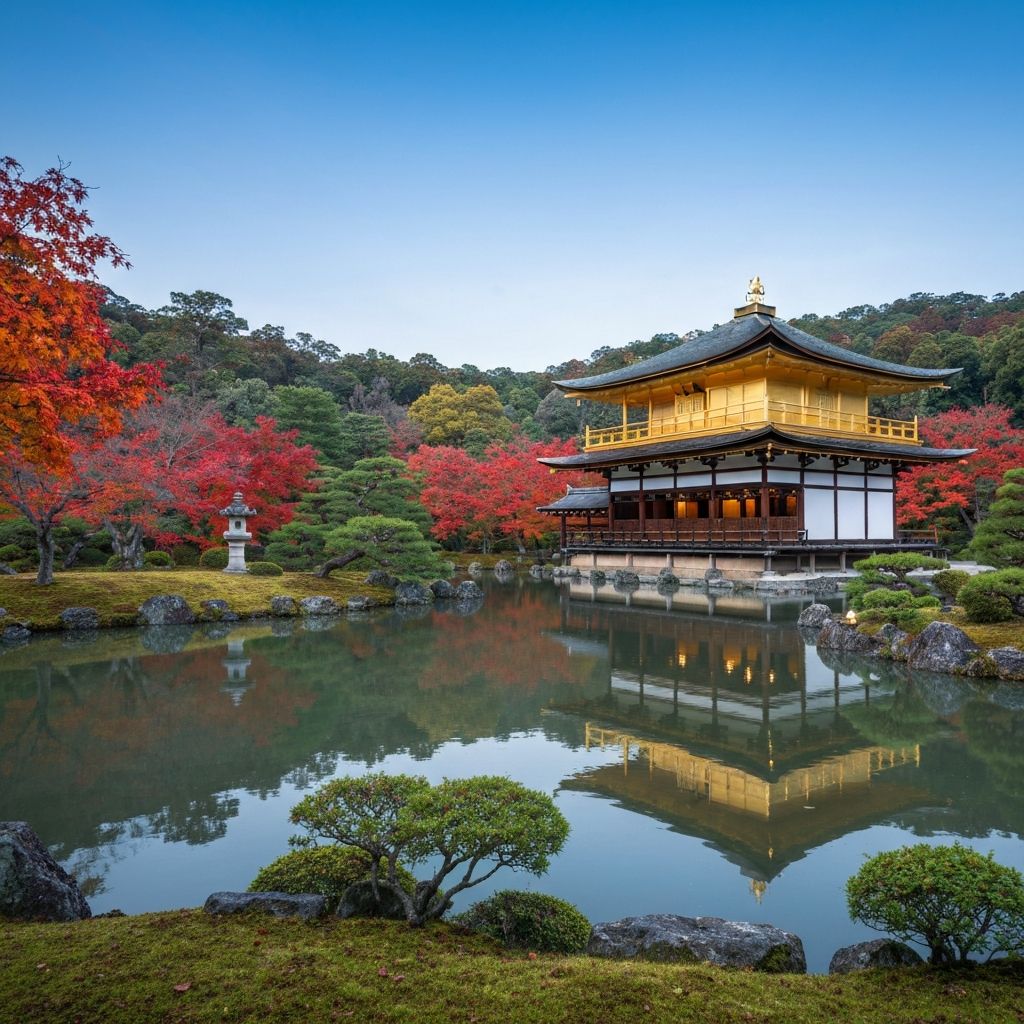
For over a millennium, Kyoto served as Japan's imperial capital, a crucible where Shinto animism, Buddhist philosophy, and aristocratic refinement converged to create a culture of exquisite restraint. The city's 2,000 temples and shrines are not relics frozen in time—they are living practices, maintained by monks who rise at dawn to sweep stone pathways and tend gardens designed to mirror the cosmos itself. Zen Buddhism, which arrived from China in the 12th century, found its purest expression here: in the stark beauty of Ryoan-ji's rock garden, in the golden radiance of Kinkaku-ji reflected upon still water, in the crimson torii gates of Fushimi Inari ascending into forested mountains.
To plan a retreat or ceremony in Kyoto is to step into this continuum—to become, for a brief and luminous moment, part of a narrative far older and deeper than oneself. It is why couples seeking not just a wedding, but a rite of passage, increasingly turn to Kyoto's temple grounds, where vows are witnessed not by crowds, but by centuries-old cedars and the quiet gaze of stone Buddhas.
Ryokan Excellence: The Art of Japanese Hospitality
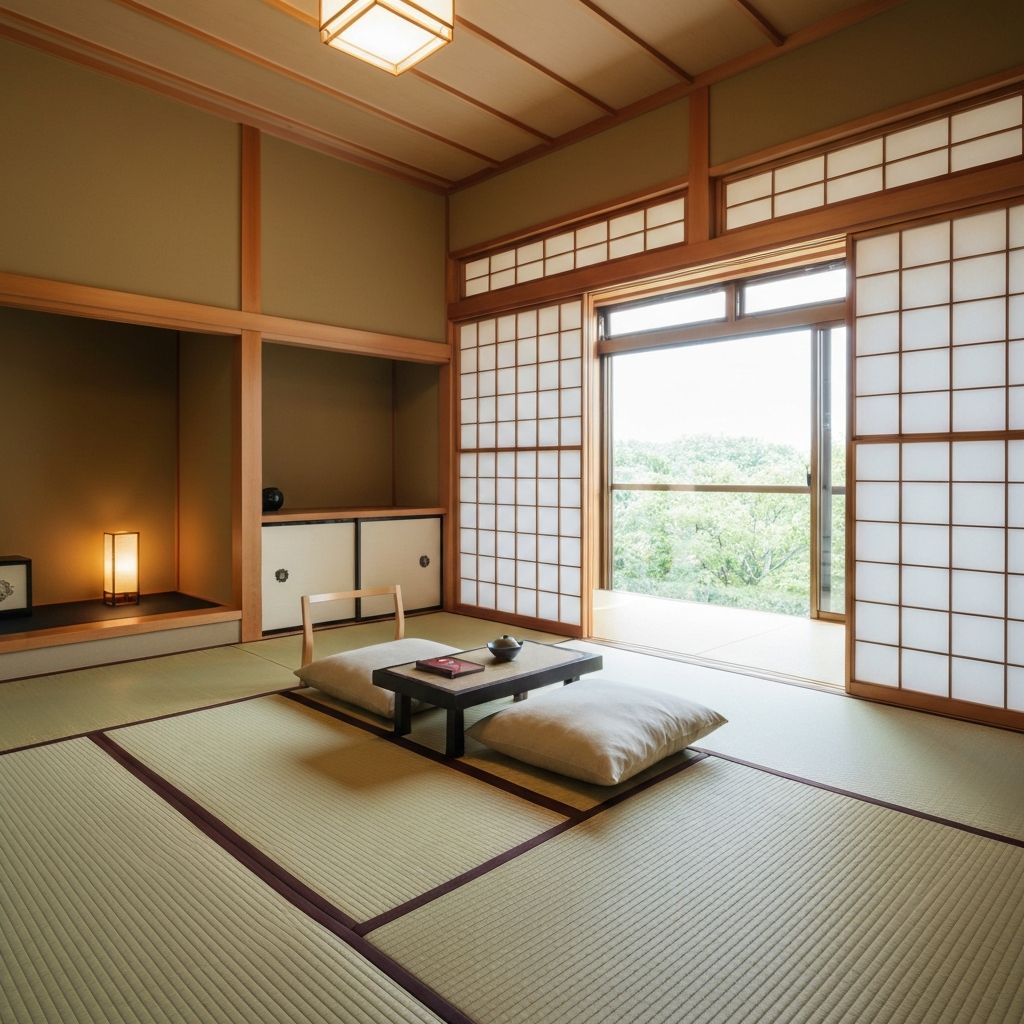
Forget the marble lobbies and concierge desks of conventional luxury hotels. A true Kyoto ryokan is an exercise in profound minimalism—tatami floors that breathe with the seasons, fusuma sliding doors painted with cranes in flight, private onsen baths carved from single stones and fed by natural hot springs. These are not accommodations; they are stages for the theater of presence, where every element—from the ikebana arrangement in your tokonoma alcove to the kaiseki dinner served on heirloom ceramics—is calibrated to deepen your awareness of the present moment.
Elite ryokan like Tawaraya (favored by visiting dignitaries and artists) or the hillside sanctuary of Hoshinoya Kyoto offer not merely rooms, but sanctuaries where couples can experience the ritual of shukubo (temple lodging) reimagined through a lens of contemporary luxury. Wake to the sound of temple bells echoing across the valley. Practice morning zazen meditation with resident monks. Return in the evening to find your futon meticulously laid out, your yukatafolded beside a pot of ceremonial tea. This is hospitality as meditation—an invitation to shed the noise of the external world and inhabit, fully, the space you occupy.
Traditional Tea Rituals: The Ceremony of Presence
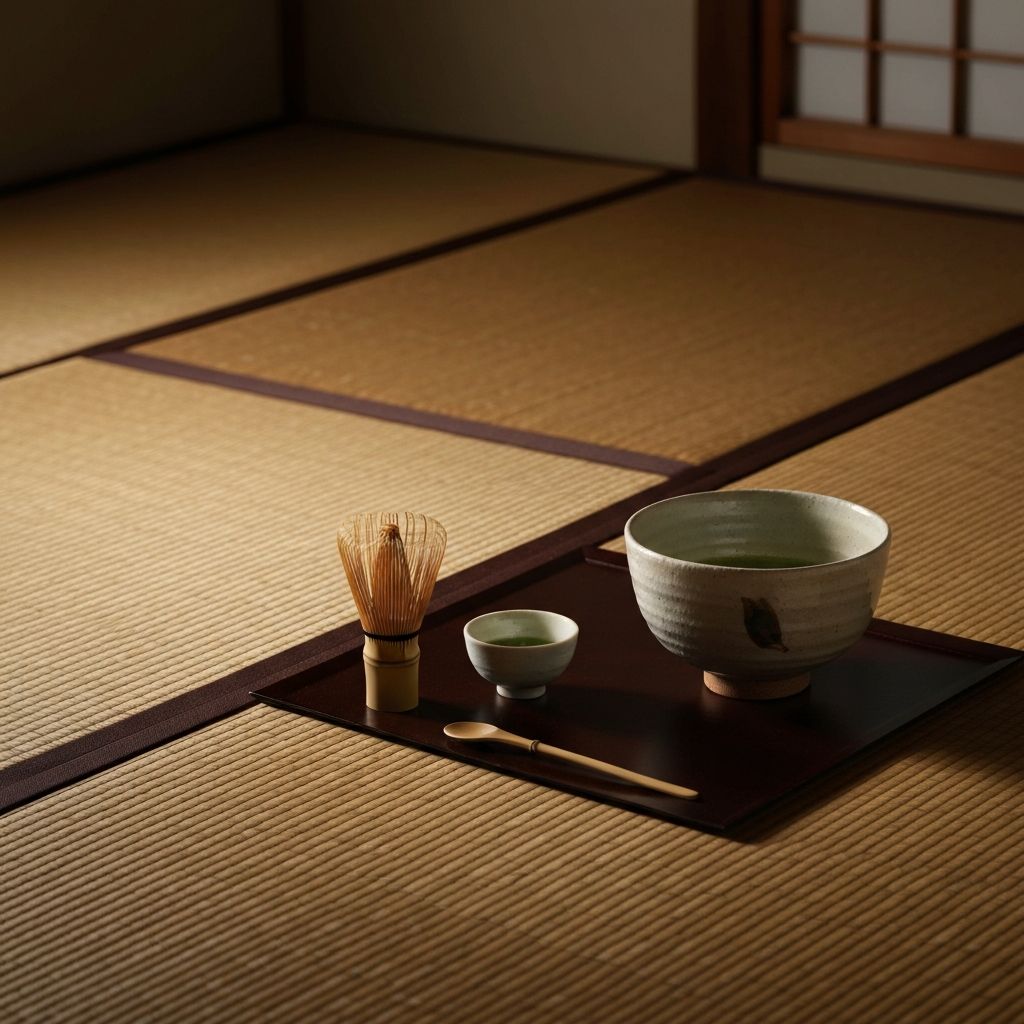
The Japanese tea ceremony—chanoyu—is not about drinking tea. It is a choreographed meditation on impermanence, beauty, and respect, distilled into a series of precise gestures performed in a space no larger than four-and-a-half tatami mats. For couples seeking to infuse their union with symbolic depth, commissioning a private tea ceremony in one of Kyoto's historic teahouses—such as those nestled in the gardens of Urasenke or within the grounds of Daitoku-ji temple—transforms the wedding weekend into something transcendent.
You will enter through a low doorway designed to humble even the proudest samurai. You will cleanse your hands and mouth at a stone basin beneath a bamboo grove. A master tea practitioner—often a woman who has devoted decades to perfecting this art—will prepare matcha with movements so deliberate they seem to slow time itself. The bowl will be turned three times before you drink, a gesture acknowledging the artist who crafted it centuries ago. In this ritual, you are reminded that all beauty is fleeting, and therefore sacred. It is a lesson worth carrying into marriage.
Hidden Forest Shrines: Sanctuaries Beyond the Guidebooks
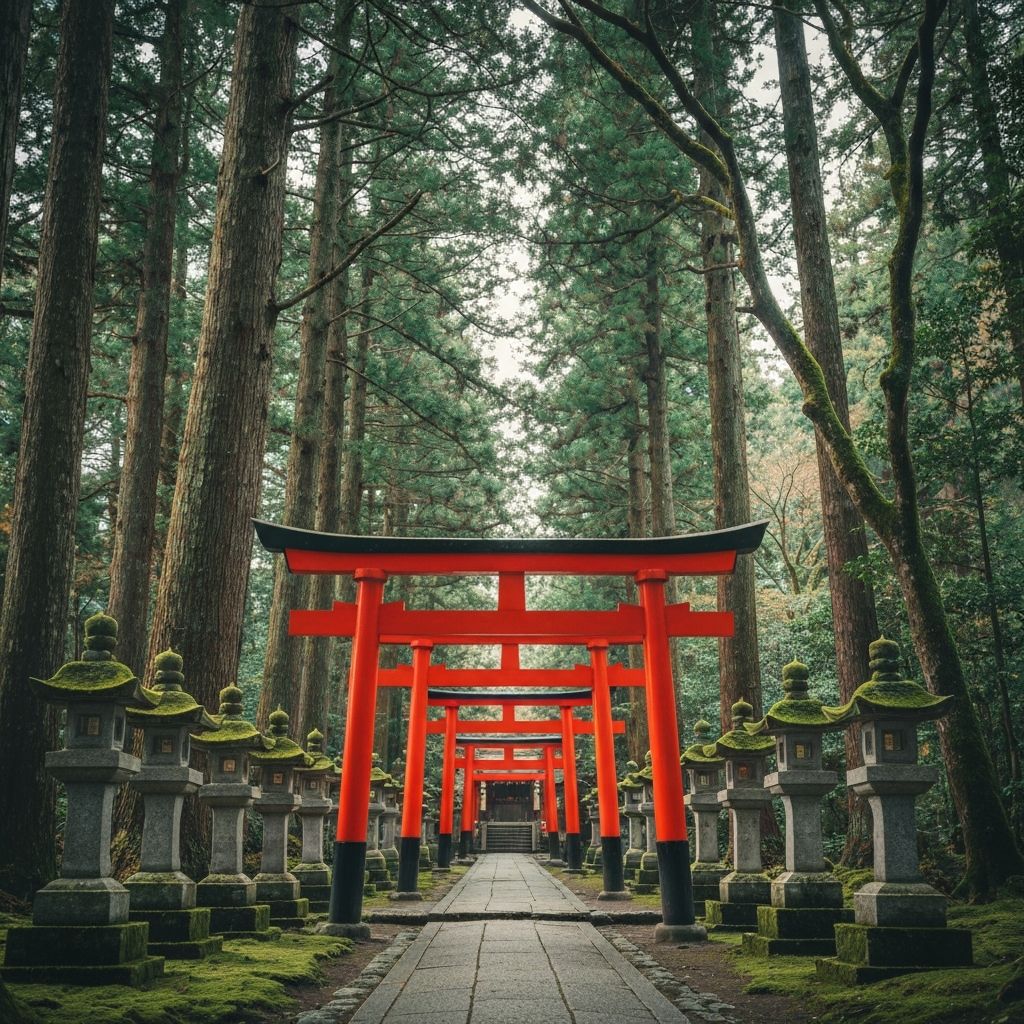
While tourists flock to the vermilion gates of Fushimi Inari, the discerning traveler seeks Kyoto's hidden sanctuaries: Kifune Shrine, clinging to a mountainside where snow falls even in late spring; Kamigamo Shrine, one of the city's oldest, where white horses once carried imperial prayers to the gods; or the moss temples of Saiho-ji, accessible only by reservation and requiring visitors to transcribe Buddhist sutras before entering the gardens—a brilliant filter ensuring that only the genuinely contemplative gain entry.
These are not venues for large weddings, but for intimate vow renewals, handfasting ceremonies, or simply quiet pilgrimage. Imagine exchanging promises beneath the ancient cedars of Kurama-dera, where the warrior-monk Yoshitsune is said to have trained, or at Ohara's Sanzen-in, where hydrangeas bloom in a silence so complete you can hear the wind moving through cryptomeria trees. These shrines do not offer luxury in the conventional sense—no chandeliers, no champagne—but they provide something infinitely more rare: the sensation of stepping outside time.
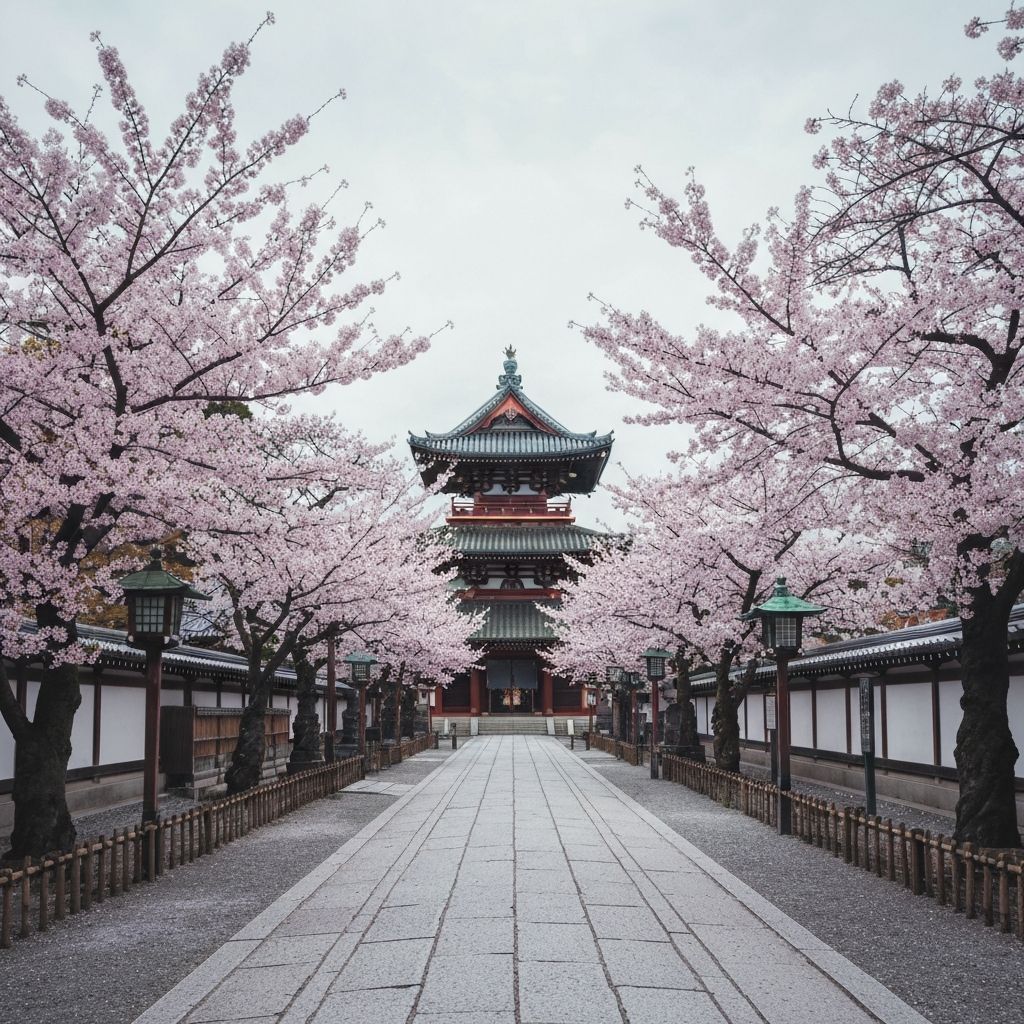
Seasonal Elegance: Sakura in Spring, Fire in Autumn
Kyoto's calendar is governed not by months, but by the ephemeral beauty of seasonal transformation—a philosophy the Japanese call mono no aware, the pathos of things passing. To time your retreat or ceremony around these moments is to align yourself with nature's own meditation on impermanence. In late March and early April, cherry blossoms explode across the city in drifts of pale pink, transforming temples like Kiyomizu-dera and the Philosopher's Path into dreamscapes where petals fall like snow. Hanami (flower viewing) parties spill into the evenings, lanterns glowing beneath the blossoms as sake flows and poets recite verses about beauty that cannot last.
But it is autumn—late November—that Kyoto reveals its most dramatic face. Maple leaves ignite in shades of crimson and gold, turning temple gardens into living paintings. The precincts of Tofuku-ji, Eikan-do, and Arashiyama's bamboo groves become pilgrimage sites for those seeking koyo, the autumn colors. Evening illuminations cast temples in otherworldly light, shadows dancing across vermilion pillars as monks chant sutras in distant halls. To marry or renew vows during these seasons is to embed your ceremony within a larger cycle of death and rebirth—a reminder that love, like the leaves, is most beautiful when it acknowledges its own fragility.
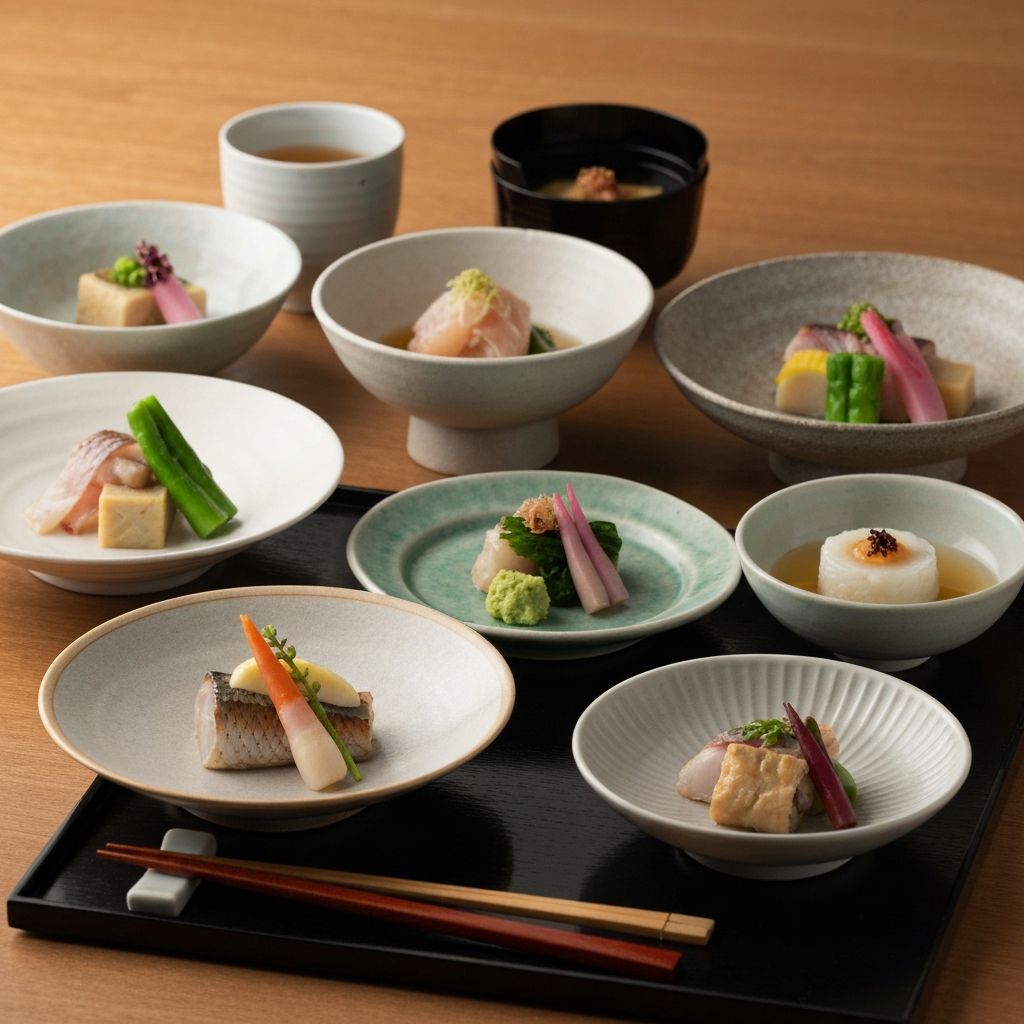
Gastronomy: The Meditation of Kaiseki Dining
Kaiseki—the pinnacle of Japanese haute cuisine—is not a meal but a choreographed journey through the seasons, composed of a dozen or more courses that arrive in a sequence designed to mirror the rhythm of a traditional tea ceremony. At three-Michelin-starred establishments like Kikunoi, Hyotei, or Gion Maruyama, chefs who have trained for decades present dishes of such meticulous beauty they border on the sacred: raw tai (sea bream) arranged to resemble swimming fish; bamboo shoots harvested that morning and grilled over binchotan charcoal; sesame tofu so delicate it trembles when you lift it with lacquered chopsticks.
Every element is seasonal, every presentation intentional. The ceramics—often centuries-old heirlooms—are chosen to complement the food's color and texture. The timing between courses allows for conversation, contemplation, and appreciation. For a wedding party of intimate size, commissioning a private kaiseki dinner in a traditional machiya townhouse or within a ryokan's private dining pavilion transforms the reception into an act of collective meditation—a reminder that nourishment, when approached with reverence, becomes communion.
Final Reflections: The Stillness You Carry Home
Kyoto does not compete with the turquoise drama of the Maldives, the Renaissance grandeur of Tuscany, or the accessible elegance of Croatia's Dalmatian Coast. It offers something entirely distinct: the luxury of interior transformation. Here, the most profound moments occur not in grand gestures, but in the quiet click of a tea bowl returning to its saucer, the soft rustle of silk kimono against tatami, the way moonlight filters through rice-paper screens to cast shadows that shift like breathing.
When you leave Kyoto—whether after a weekend retreat, a temple wedding, or a month-long sabbatical—you will carry with you a different quality of silence. Not the absence of sound, but a stillness that exists beneath the surface of daily life, a center you can return to when the world grows too loud. This is the true gift of the Zen sanctuary: not what you experience there, but what you become because of it. The ceremony may end, but the practice—the art of being fully present—continues forever.
Whether you seek a temple wedding witnessed by ancient cedars, a wellness retreat infused with meditation and hot spring bathing, or simply the chance to step outside the relentless momentum of modern life, Kyoto awaits—not as a destination, but as a threshold. Cross it, and discover what stillness can teach.
Rate This Experience
Your feedback helps us curate exceptional content